

 App Store

COIN VALUE GUIDES · EISENHOWER DOLLARS
Eisenhower Dollar: Silver Issues, Key Dates and Value Basics
Identify clad and silver Eisenhower dollars from 1971–1978, understand the Bicentennial date and build accurate issue-by-issue comparisons.
 HeriBase TeamPublished
 In this article
Which Eisenhower dollars are silver or worth more?
Eisenhower dollars are the large U.S. $1 coins dated 1971–1978, including the dual-date 1776–1976 issue. Most ordinary worn clad examples have only a small premium over face value. They are not all silver.
Standard 40% silver collector issues bear S and dates 1971–1974 or 1776–1976. However, S alone is insufficient: San Francisco also made clad Proofs from 1973 onward. Standard 1977–1978 issues are clad. Rare wrong-metal errors must be authenticated separately.
For context, NumisMedia’s guide checked October 16, 2026 lists a regular-strike 1976-S silver dollar at $22.80 in Mint State 63 (MS63), versus $6.60 for a clad 1976 Type 2 Philadelphia coin at the same grade. These are guide estimates, not offers. Date, metal, finish, variety and condition must all match before using a price.
The large dollar with the Moon-landing eagle
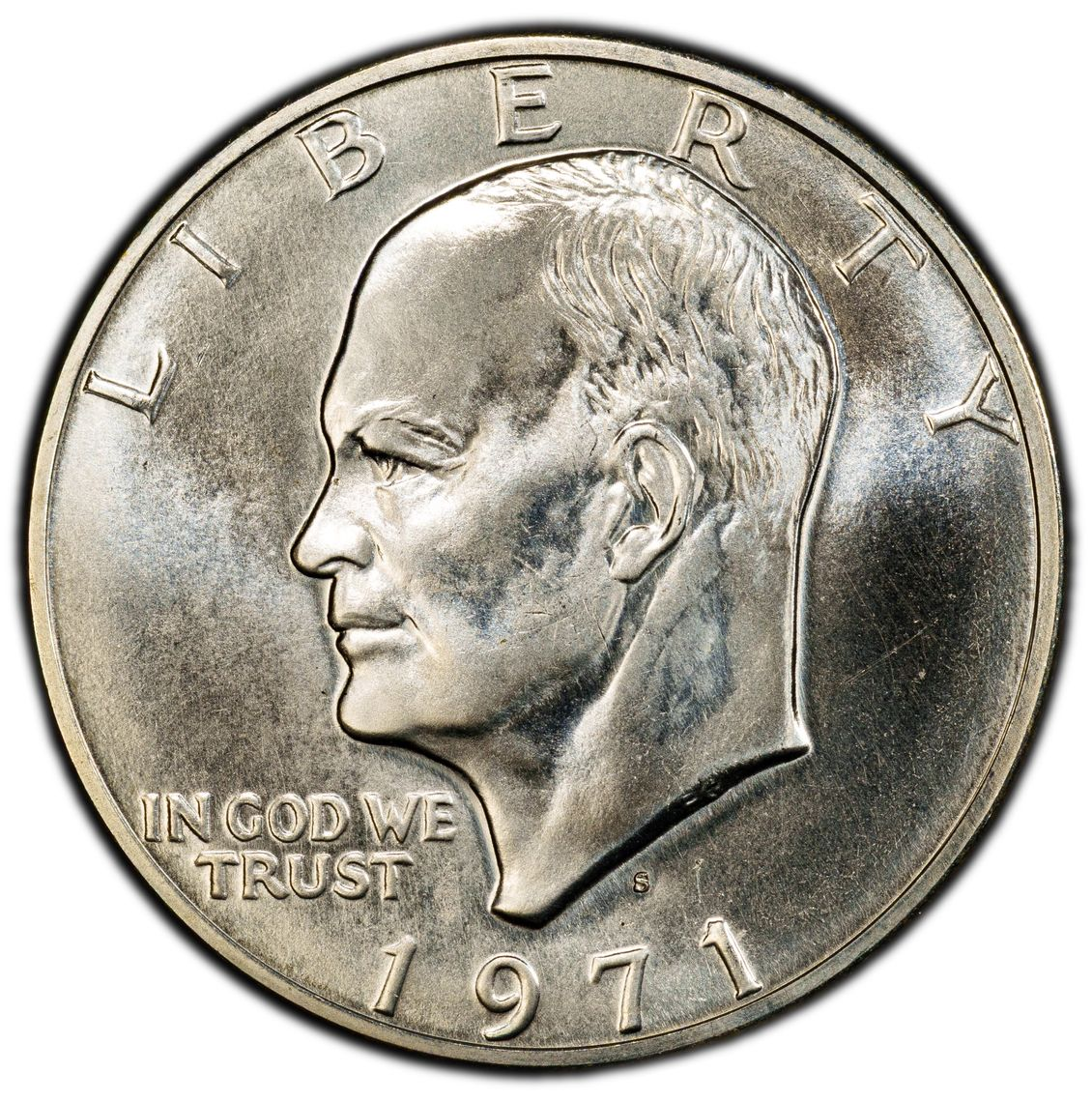
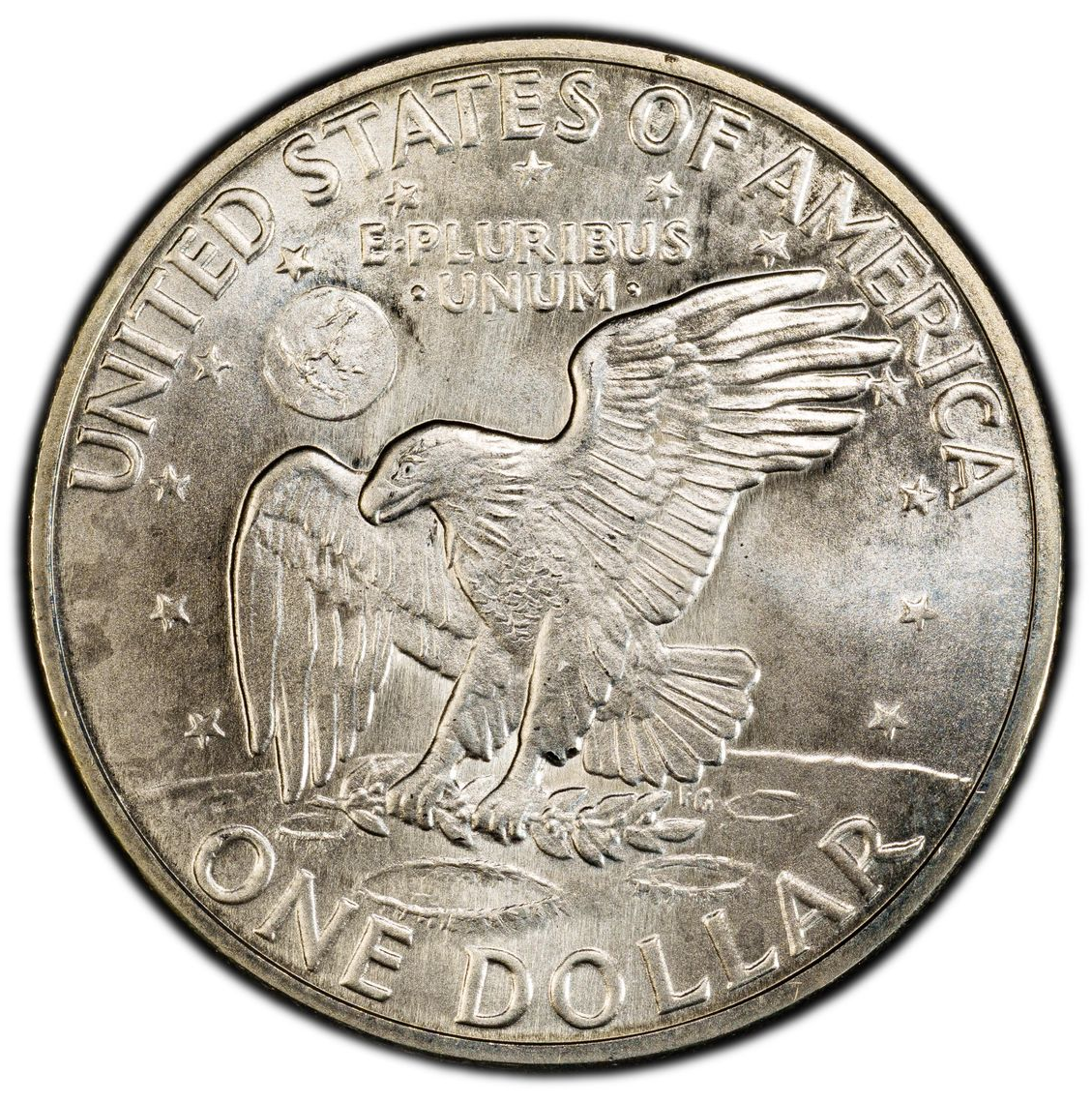
This silver collector example represents the standard eagle reverse. The dual-date Bicentennial dollar uses the Liberty Bell and Moon instead; its reverse should not be mistaken for a different denomination.
A president, Apollo 11 and a short-lived large dollar
| Feature | What to record |
|---|---|
| Denomination | $1 |
| Dates | 1971–1978; no ordinary 1975-dated issue |
| Bicentennial date | 1776–1976, used for coins produced in 1975 and 1976 |
| Mints | Philadelphia: no letter; Denver: D; San Francisco: S |
| Standard materials | Copper-nickel clad, plus 40% silver collector issues |
| Finishes | Regular strikes and Proofs; compare separately |
The series began in 1971 after Dwight D. Eisenhower’s death. Frank Gasparro paired the president’s portrait with an Apollo 11-inspired eagle landing on the Moon. The design brought a modern spaceflight achievement to a denomination long associated with earlier silver dollars.
For the Bicentennial, Dennis Williams’s Liberty Bell and Moon design replaced the eagle. The same dual date appeared on coins made in both 1975 and 1976, so there is no ordinary 1975 date to add between 1974 and 1976.
The Eisenhower series ended in 1978. The smaller Susan B. Anthony dollar followed in 1979. Size and reverse design are useful first checks when identifying a mixed group of dollar coins.
Separate the five things that affect a comparison
Date and mint mark
Find the letter above the date, below Eisenhower’s neck. Record the date exactly, including both years on a Bicentennial coin. Standard no-mint-mark and D issues are clad, but unusual wrong-planchet claims should be examined rather than inferred from color.
Metal and finish
San Francisco’s silver collector dollars include regular strikes and Proofs. Beginning in 1973, S-marked clad Proofs also exist, so “S means silver” stops being a safe shortcut. Consult the original issue description and specifications, then assess the coin itself. Packaging can be switched and surface color is not a metal test.
The 1971 dollar guide explains Blue Ike and Brown Ike packaging and finish differences. Use it for first-year details instead of transferring those nicknames to every later issue.
The 1973 distribution exception
Philadelphia and Denver dollars dated 1973 were released only in Mint Sets. That distribution history distinguishes them from ordinary circulation releases, but it does not tell you the grade of a loose coin. A set coin may acquire marks or later enter circulation.
Varieties belong to their own dates
The 1972 dollar guide covers the three Philadelphia reverse types and their Earth details. Bicentennial Type 1 and Type 2 refer to a different comparison, associated with reverse lettering. Do not identify a 1976 variety with the 1972 globe test or borrow its price.
If assembling a set, choose regular strikes, Proofs, or both. Record metal and variety as separate fields. A single space labeled “1976-S” can conceal several different collector issues.
Eisenhower dollar value: compare the same issue and grade
| Issue | Metal | Finish / grade | Guide value | Limit |
|---|---|---|---|---|
| 1976 Type 2 · no mark | Clad | Regular strike · MS63 | $6.60 | Not Type 1 |
| 1976-S | 40% silver | Regular strike · MS63 | $22.80 | Not Proof |
| 1977 · no mark | Clad | Regular strike · MS63 | $7.80 | No special variety assumed |
| 1978 · no mark | Clad | Regular strike · MS65 | $23.75 | Requires the stated grade |
These are selected retail-guide comparisons, not a price range for the whole series. Common circulated clad dollars need a lower-condition comparison; a bright surface does not justify a Mint State value. Silver issues respond to metal prices as well as collector demand, so a dated guide is not a permanent floor.
On a large dollar, marks across the cheek and open fields can be conspicuous even without circulation wear. Proofs require their own surface assessment, including hairlines, haze and contrast. Use the grading guide for the difference between wear, grade and Proof finish.
NGC documents rare Denver silver-planchet errors among 1974-D, 1976-D and 1977-D dollars. Their existence is a reason to investigate credible anomalies, not to describe ordinary Denver dollars as silver. Compare weight and issue details, then use the appraisal guide for a potentially significant candidate.
For a collection record, save front, back and mint-mark photographs and keep original packaging with its coin. The HeriBase user guide explains recording and identification tools; a suggested identity does not certify metal or a numerical grade.
The key takeaway
Most Eisenhower dollars are clad; standard silver collector issues are a specific group of S-marked dates. An S by itself, a large size or a silver color is not enough to assign silver value.
Record date, mint, metal, finish and any confirmed variety, then compare matching condition. Use the 1971 and 1972 guides for those dates, and treat suspected wrong-metal errors as authentication cases.
Frequently asked questions
Are all Eisenhower dollars silver?
No. Most are copper-nickel clad. Standard 40% silver collector issues bear S and are dated 1971–1974 or 1776–1976; other unusual silver claims require authentication.
Does S always mean an Eisenhower dollar contains silver?
No. From 1973, San Francisco also issued clad Proof dollars. Identify both the date and the specific issue rather than using the mint letter alone.
Why is there no 1975 Eisenhower dollar date?
The Bicentennial coins produced in 1975 and 1976 use the dual date 1776–1976. An ordinary date set therefore has no separate 1975-dated coin.
Are 1973 Eisenhower dollars different?
The Philadelphia and Denver 1973 dollars were released only in Mint Sets. They are still clad, and their individual condition must be assessed before choosing a value.
How do I check Eisenhower silver dollar value by year?
Identify the date, mint mark, composition and finish first. The 1971 Eisenhower dollar guide separates first-year clad and silver issues; the 1972 dollar guide also compares the three Philadelphia reverse types. Use this series guide for the wider issue checklist, then compare the same date and grade before applying a price.
References
SourcesOpen references
- U.S. Mint: Eisenhower dollar history and materials
- U.S. Mint: Bicentennial dollar design and dual-date production
- PCGS: date, metal, finish and variety checklist
- PCGS: 1973 Philadelphia and Denver distribution
- NGC: series overview and Denver wrong-planchet errors
- NumisMedia: Eisenhower guide values, checked October 16, 2026