

 App Store

COIN VALUE GUIDES · EISENHOWER DOLLARS
1972 Silver Dollar Value:Clad, Silver and the Type 2 Reverse
Identify your 1972 Eisenhower dollar by mint mark, metal and reverse type. Compare real coin details and dated grade values before estimating a premium.
 HeriBase TeamPublished
 In this article
How much is a 1972 silver dollar worth?
Most worn 1972 Eisenhower dollars with a D or a common no-mint-mark reverse have only a small premium over their $1 face value. These circulation coins contain no silver. Genuine standard 1972-S collector dollars contain 40% silver and need a separate valuation.
The main no-mint-mark exception is the Type 2 reverse. At Mint State 63 (MS63, uncirculated), NumisMedia lists $84 for Type 2, compared with $21.60 for Type 1 and $15.60 for Type 3. Its 1972-S silver regular-strike benchmark is $22.80 at MS63. These are guide prices checked October 16, 2026, not offers for an ungraded coin; higher grades, Proof finishes and silver prices change the comparison.
To value yours, read the mint mark, separate clad from silver, and inspect the tiny Earth above the eagle. Then match the variety, finish and condition to recent sold coins. A missing mint mark or a silver-colored surface alone does not make it rare.
Find the date, portrait and Earth
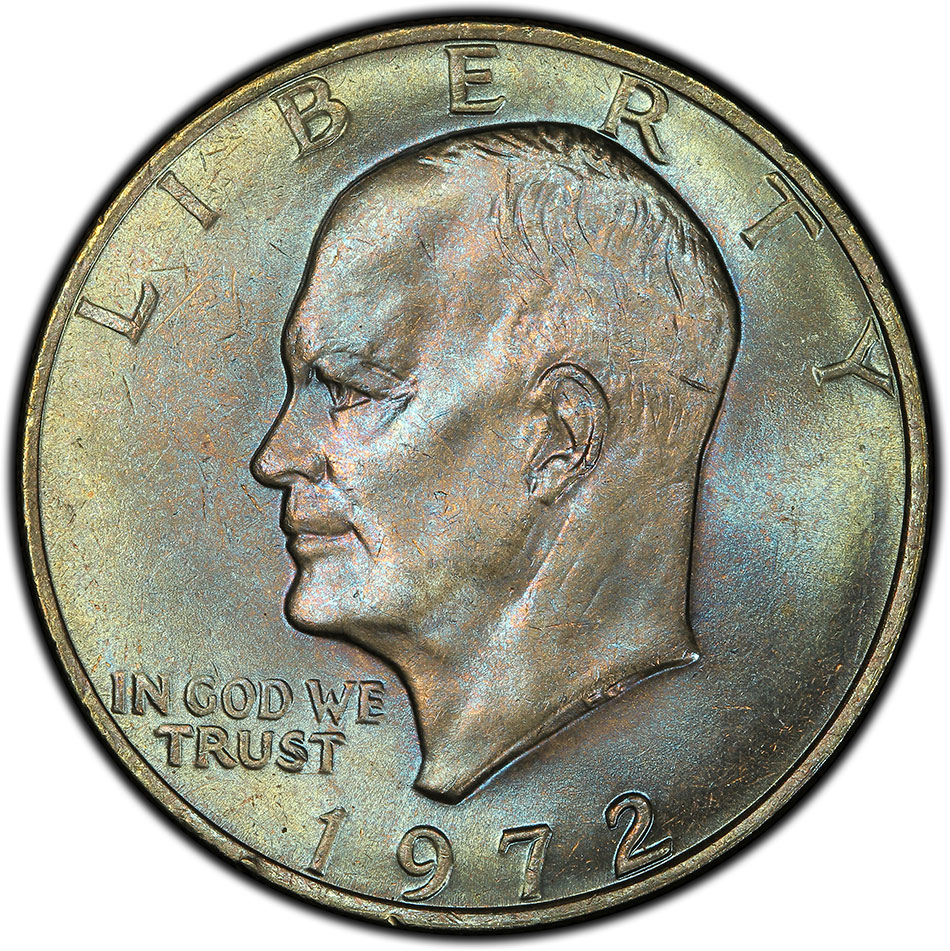
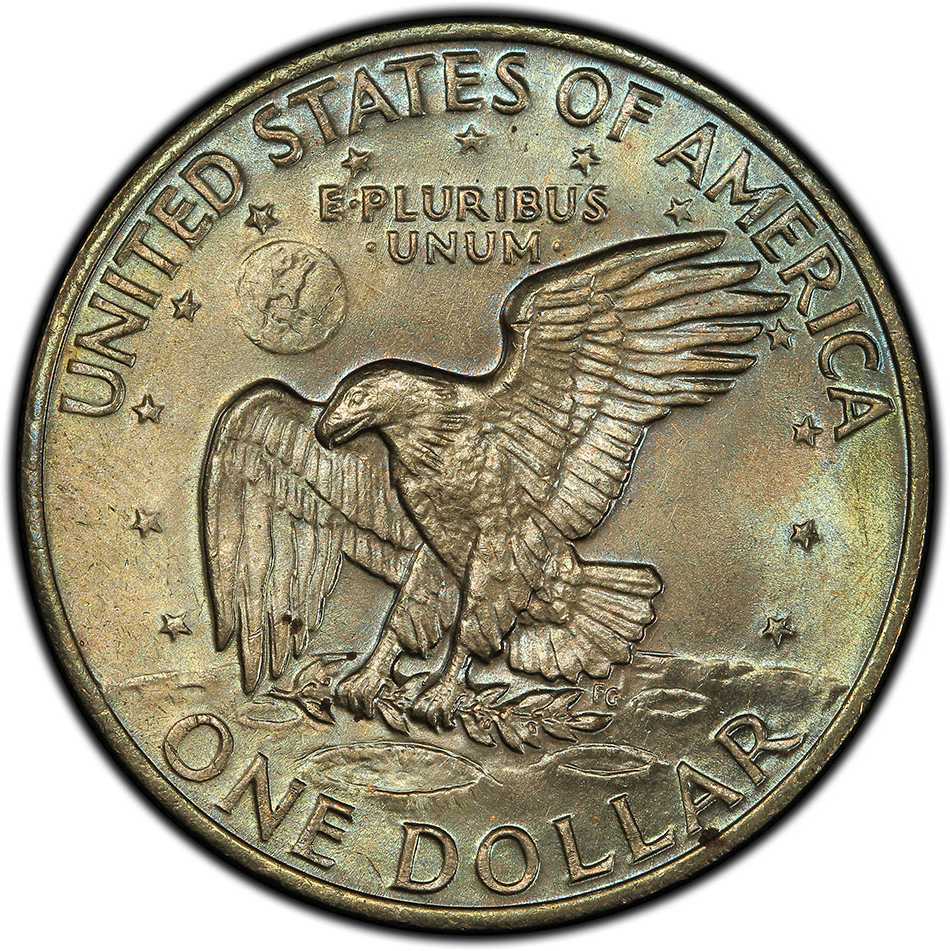
Both photographs show the same Philadelphia Type 2 example. Its toning is not a silver-content test, and its preservation is not representative of every dollar found in circulation.
Clad, silver and the three reverse types
Why a president and a Moon landing share one dollar
The Eisenhower dollar joined U.S. coinage in 1971, ending the gap after the last Peace dollars of 1935. Its portrait honors Dwight D. Eisenhower; the eagle landing on the Moon celebrates Apollo 11. Frank Gasparro adapted the spaceflight theme into the reverse design. The distant Earth is therefore part of the story, not a mint mark.
The series also reflects a change in what a “silver dollar” meant. Congress authorized copper-nickel clad dollars for circulation while preserving a silver version for collectors. A 1972 date can consequently belong to two different metal categories. Unlike the earlier 1922 Peace silver dollar, an ordinary 1972 circulation dollar has no silver bullion value.
| Issue | Mint mark | Metal | What to inspect | Value driver |
|---|---|---|---|---|
| Type 1 | None · Philadelphia | Copper-nickel clad | Low-relief Earth; blunt Florida | Condition |
| Type 2 | None · Philadelphia | Copper-nickel clad | Flattened Caribbean islands | Scarcer reverse and condition |
| Type 3 | None · Philadelphia | Copper-nickel clad | More distinct island shapes | Condition |
| Denver regular strike | D | Copper-nickel clad | Date and D below the neck | Condition; usually a common issue |
| Silver collector issues | S | 40% silver overall | Regular strike or Proof finish | Silver, grade and finish |
The Type 1–3 comparison below applies to 1972 Philadelphia circulation strikes. Do not assign the valuable Philadelphia Type 2 label to an S-mint collector coin merely because its Earth looks similar.
1972 · no mint mark
Type 1: a blunt Florida
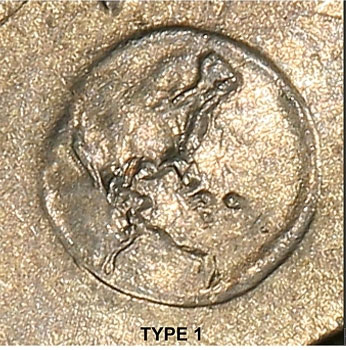
What to look for The Florida peninsula looks short and blunt, with roughly shaped islands below it. The overall Earth design has lower relief.
Before deciding Compare the whole globe with Type 3. A single soft island is not enough to classify a worn coin.
1972 · no mint mark
Type 2: flattened islands
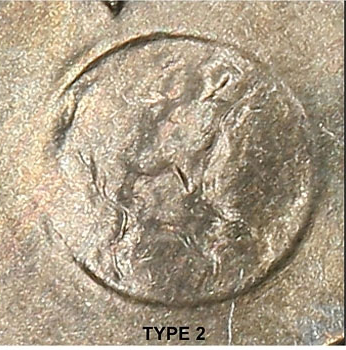
What to look for Look below Florida: the Caribbean islands are very flat and may appear almost absent. Florida has a more elongated, funnel-like outline.
Before deciding This is the scarcer Philadelphia reverse. A proof-style reverse design does not make this circulation strike a Proof or a silver coin.
1972 · no mint mark
Type 3: clearer island shapes
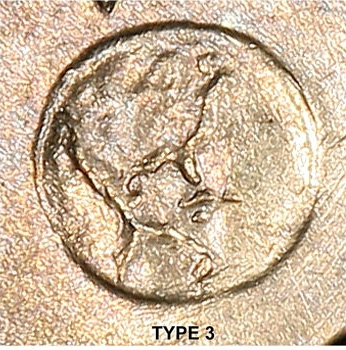
What to look for Florida and the Caribbean are more clearly outlined. Cuba extends to both sides beneath the peninsula.
Before deciding Confirm the island arrangement rather than judging sharpness alone. Wear or glare can hide details on any type.
1972 Eisenhower dollar value: mint, reverse type and condition
| Regular-strike issue | MS63 | MS64 | MS65 | How to use it |
|---|---|---|---|---|
| 1972 Type 1 | $21.60 | $31.25 | $100 | Confirm the reverse first |
| 1972 Type 2 | $84 | $218.75 | $1,750 | Grade makes a large difference |
| 1972 Type 3 | $15.60 | $25 | $95 | Use the matching type |
| 1972-D | $9.60 | $15 | $20 | Not a Philadelphia Type 2 |
| 1972-S silver | $22.80 | $23.75 | $24.06 | Regular strikes only; excludes Proofs |
MS means Mint State: no circulation wear, although contact marks may remain. The table compares specified grades, not all coins with the same date. Guide prices are benchmarks rather than guaranteed sale proceeds. For example, a Type 2 must actually qualify as MS65 before the $1,750 entry is relevant. Use the coin grading scale to separate wear from marks before selecting a comparison.
For a 1972-S, keep Proofs separate from regular strikes. Proof is a manufacturing method; mirrorlike fields and device contrast need examination, especially if the coin has been handled. A polished circulation coin is not a Proof. NGC lists about 0.3162 troy ounce of silver in the silver issue: multiply that by the current silver spot price per troy ounce for an approximate metal-value reference. That calculation excludes collector premiums, fees and a buyer’s margin.
Three checks before you choose a price
- Read 1972 and inspect below the neck. No mint mark indicates Philadelphia; D is Denver; S is San Francisco. Standard 1972-S collector issues are silver, while regular Philadelphia and Denver coins are clad. If the date or mark is unclear, take a sharper photograph before continuing.
- Check the right physical details. Clad dollars weigh about 22.7 g; silver collector dollars about 24.6 g. A copper-colored edge band supports a clad identification, but discoloration and wear can obscure it. Neither a photograph nor a scale alone authenticates an unusual coin. On a no-mint-mark dollar, compare the entire Earth with the three examples above.
- Match condition and finish to completed sales. Search for the same year, mint, reverse type and grade. Compare several results, note their dates, and check whether buyer’s fees are included. Scratches, cleaning or damage can make a straight-grade guide entry unsuitable.
Keep the coin unpolished; use the cleaned-coin guide if its surfaces look unusually glossy or lined. If a suspected Type 2 or unusual metal composition would materially affect the value, follow the appraisal guide before paying for certification.
Save the details in HeriBase
Photograph the full front and back, then add a close-up of the mint-mark area and Earth. Use the HeriBase identification workflow to organize the coin and compare the suggested identity with those details. An app suggestion or reference price does not independently certify a reverse type, silver content or numerical grade.
The key takeaway for a 1972 dollar
Start with the mint mark and metal: ordinary worn Philadelphia and Denver dollars are clad and usually carry only a small premium over $1; standard 1972-S collector dollars contain 40% silver.
On a no-mint-mark coin, inspect the Earth for Type 2 before dismissing it as common. Once the type is confirmed, condition determines which price comparison applies. Keep silver regular strikes and Proofs separate, and use recent matching sales to refine the dated benchmarks above.
Frequently asked questions
Is every 1972 silver dollar made of silver?
No. Ordinary 1972 Philadelphia and Denver Eisenhower dollars are copper-nickel clad with no silver. Standard 1972-S collector dollars contain 40% silver overall; their silver color alone is not the test.
Is a 1972 dollar with no mint mark rare?
No mint mark is normal for Philadelphia. Type 1 and Type 3 are common reverse types; Type 2 is scarcer. Inspect Florida and the Caribbean islands on the small Earth above the eagle before assigning a variety.
How can I identify a 1972 Type 2 dollar?
First confirm 1972 and no mint mark. On the reverse Earth, Type 2 has very flat, nearly invisible Caribbean islands and an elongated Florida peninsula. Compare the whole design; wear or glare can also hide islands.
Does the S on a 1972 dollar mean Proof?
No. San Francisco issued both regular-strike and Proof silver collector dollars in 1972. Both contain 40% silver, but they require separate condition and price comparisons.
What determines a 1972 Eisenhower dollar’s value?
For ordinary Philadelphia coins, identify the Type 1, Type 2 or Type 3 reverse before choosing a price; Type 2 is the scarcer comparison. Denver clad coins and S silver collector issues have their own entries. A 1972 dollar coin’s grade and finish also matter, so neither its $1 denomination nor its silver-colored appearance establishes its collector value.
References
SourcesOpen references
- U.S. Mint: the return of the dollar and its two metal categories
- U.S. Mint: Eisenhower portrait and Apollo 11 design history
- PCGS: distinguishing the three 1972 reverse types (July 10, 2020)
- PCGS CoinFacts: Type 2 identification and clad specifications
- NGC Coin Explorer: 1972-S silver composition, weight and silver content
- NumisMedia: Eisenhower dollar FMV guide, checked October 16, 2026