

 App Store

COIN VALUE GUIDES · EISENHOWER DOLLARS
1971 Silver Dollar Value:Mint Marks, Silver Content and Proofs
Separate ordinary 1971 Eisenhower dollars from silver collector issues. Learn what Blue Ikes and Brown Ikes mean, and compare values by finish and condition.
 HeriBase TeamPublished
 In this article
How much is a 1971 silver dollar worth?
A common worn 1971 Eisenhower dollar usually has only a small premium over its $1 face value. Coins with no mint mark or a D are copper-nickel clad, not silver. Standard 1971-S collector dollars contain 40% silver and are worth more than face value because of their metal and collectible appeal.
For uncirculated coins, the mint and grade matter. NumisMedia’s guide checked October 16, 2026 lists $9.60 for either Philadelphia or Denver at Mint State 63 (MS63), versus $22.80 for a regular-strike 1971-S at that grade. Its ordinary 1971-S Proof benchmark is $24.38 at Proof 65 (PR65), excluding Cameo and Deep Cameo designations. These are dated guide estimates, not guaranteed sale prices.
The key exceptions are unusually well-preserved coins and confirmed varieties or mint errors. First identify the mint mark and whether the coin is a regular strike or Proof; then compare matching condition and recent sales. A first-year date, an S or an original box alone does not establish a high-value rarity.
Recognize the 1971 portrait and Moon-landing reverse
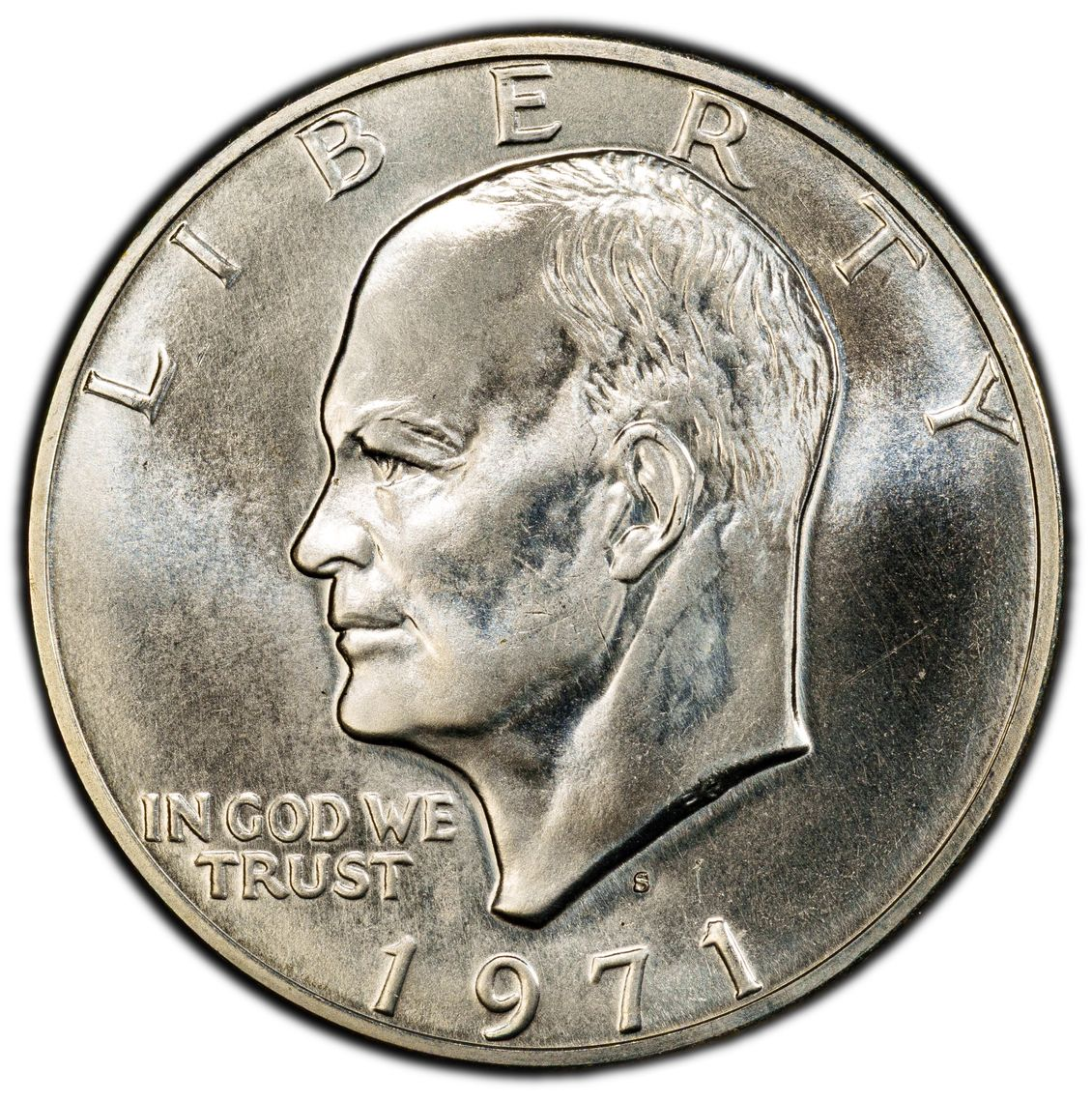
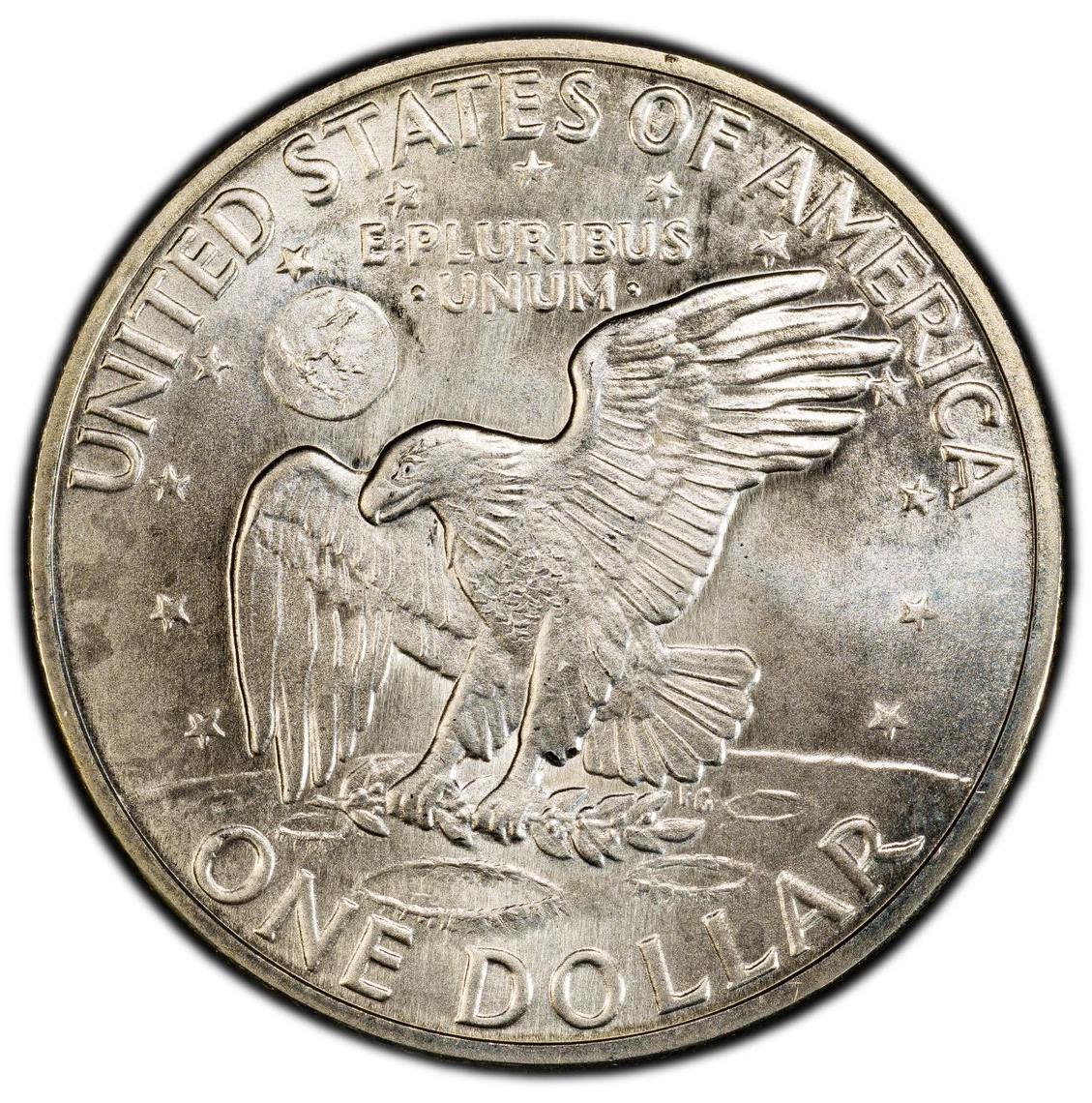
These are the two sides of one silver collector coin. A worn circulation dollar may have the same basic design, so the portrait and silver color do not establish its metal content.
The first year of the Eisenhower dollar
| Feature | What to know |
|---|---|
| Denomination and year | United States one dollar; 1971 |
| Mint marks | None: Philadelphia; D: Denver; S: San Francisco |
| Ordinary circulation issues | Philadelphia and Denver; copper-nickel clad; about 22.7 g |
| Silver collector issues | San Francisco; 40% silver overall; about 24.6 g; regular strike and Proof |
| Design | Eisenhower portrait; eagle landing on the Moon with Earth above |
| Edge | Reeded |
A new dollar, with two different audiences
The 1971 issue brought the dollar denomination back after the Peace dollar’s last circulating date of 1935. Frank Gasparro’s design paired President Dwight D. Eisenhower with an Apollo 11-inspired reverse. The coin honored both a president and a recent spaceflight achievement, but its circulation version no longer carried the silver content associated with earlier dollars.
Collectors could order separate silver issues. The Mint announced original prices of $3 for an uncirculated silver dollar and $10 for a Proof. Those were issue prices in 1971, not today’s valuations. Silver production began at San Francisco on March 31, 1971.
Proof mailings began on October 14, Eisenhower’s birthday. In its October 8 announcement, the Mint reported about 4.5 million orders and warned that deliveries would continue into spring 1972. That explains how a 1971-dated Proof could have arrived the following year; it does not make it a 1972 coin.
The packaging supplied the familiar nicknames: uncirculated silver dollars became “Blue Ikes” or “Blue Pack Ikes,” while Proofs in hard plastic cases and brown outer boxes became “Brown Ikes.” Keep surviving packaging with the coin, but examine the coin itself before assigning a finish or grade.
Separate circulation coins, Blue Ikes and Proofs
Read the mint mark before checking the shine
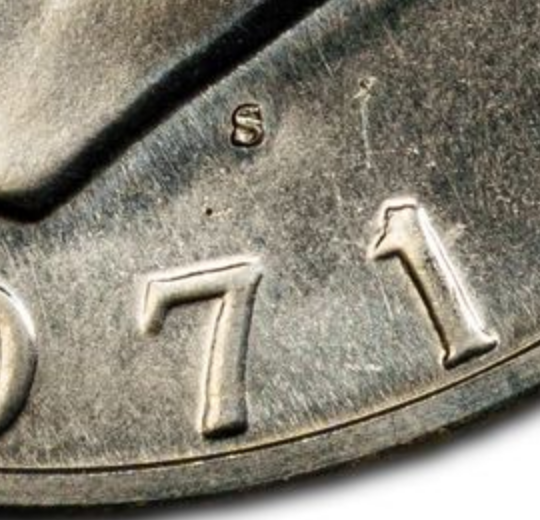
Hold the portrait upright and look between the lower edge of Eisenhower’s neck and 1971. No letter is normal for Philadelphia; D means Denver. Their standard 1971 dollars contain no silver. An S identifies the standard San Francisco silver collector issue, but does not distinguish its two finishes.
Compare the finish, not just the packaging
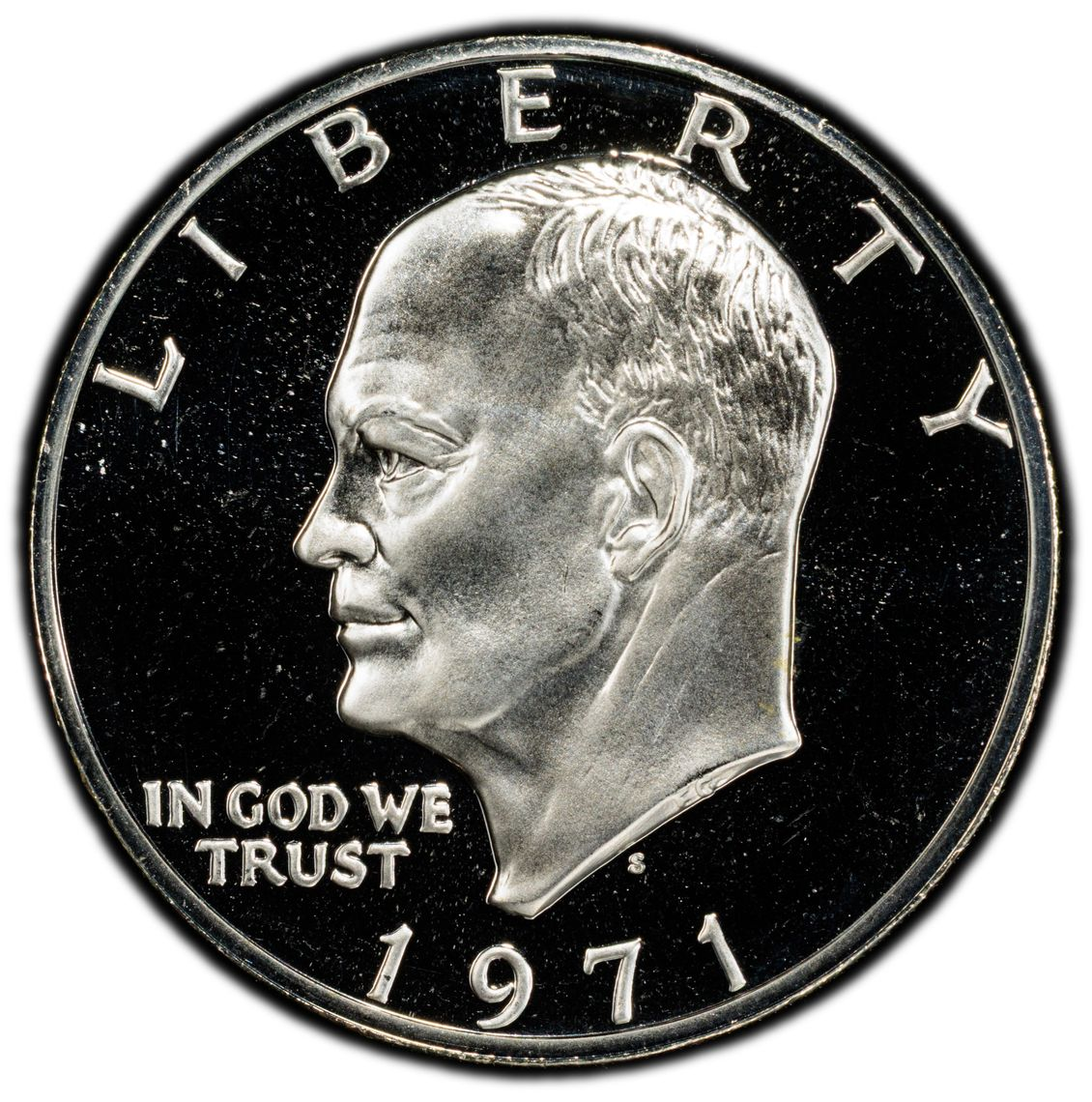
The regular-strike silver coins were produced by high-speed equipment and could acquire contact marks before reaching collectors. “Uncirculated” means no circulation wear; it does not mean flawless. Proofs used a different production process. The photographed Proof’s mirrored background and frosted portrait illustrate contrast, not a grade that can be assigned to another coin from a photograph.
A silver issue weighs about 24.6 g, compared with about 22.7 g for clad. A visible copper-colored core at the edge supports a clad identification, but neither an edge photograph nor weight alone authenticates a coin. Avoid scratching, filing or polishing it to test the metal.
Keep date-specific varieties separate
The well-known Philadelphia Type 1, 2 and 3 reverse comparison belongs to 1972; use the 1972 dollar reverse guide for that date. Do not transfer those prices to a 1971 coin because its Earth looks similar. If lettering or another detail appears unusual, compare the exact date, mint and strike type with a cataloged variety before treating it as an error.
1971 Eisenhower dollar value by mint and condition
For a circulated baseline, NGC’s September 2026 summary placed an ordinary 1971-D at $1.05–$1.50. A worn, common coin therefore needs a very different comparison from an uncirculated silver collector issue. The table below uses NumisMedia’s October 14, 2026 guide, checked October 16, and keeps regular strikes and Proofs in separate rows.
| Issue | Metal | Grade | Guide value | Comparison limit |
|---|---|---|---|---|
| 1971 · no mint mark | Clad | MS63 / MS65 | $9.60 / $70 | Ordinary regular strikes |
| 1971-D | Clad | MS63 / MS65 | $9.60 / $27.50 | Ordinary regular strikes |
| 1971-S regular strike | 40% silver | MS63 / MS65 | $22.80 / $24.06 | Not Proofs |
| 1971-S Proof | 40% silver | PR65 | $24.38 | No Cameo designation |
| 1971-S Deep Cameo Proof | 40% silver | PR65 | $25.63 | Requires the contrast designation |
MS means Mint State, the uncirculated grading range; PR indicates Proof. Cameo and Deep Cameo describe contrast between the raised design and the surrounding fields, not silver purity. These guide figures are not dealer purchase offers. Selling costs, market changes, surface problems and the accuracy of the grade can change the amount received.
Why a clean-looking coin may not match a high-grade price
Look for marks on Eisenhower’s cheek and neck, disturbance in the open fields, and wear on raised details. On Proofs, fine hairlines, haze and spots can affect desirability even when the design is sharp. Use the grading guide for condition terminology and the cleaning-signs guide before comparing a glossy coin with a certified example. Do not clean it to improve its grade.
For silver issues, the metal market also matters. A fixed old guide figure should not be treated as a permanent floor or ceiling. Compare recent sales for the same issue, finish and grade, then account for auction fees and selling costs. An exceptional auction result is not a normal price for all first-year dollars.
Record the coin before seeking an appraisal
Save clear front, back and mint-mark photographs, along with any original packaging. In HeriBase, compare the suggested identity with the year and S or D you can actually see; the identification workflow explains the steps. An app reference price does not authenticate silver or certify a numerical grade.
For a potentially significant variety, error or high-grade coin, use the appraisal guide to judge whether professional examination is worthwhile. For an ordinary worn dollar, certification costs may exceed any premium.
The key takeaway for a 1971 dollar
1971 is the first year of the Eisenhower dollar, not a guarantee of rarity. Ordinary Philadelphia and Denver coins are clad and often worth little over $1 when worn. Standard 1971-S collector coins contain 40% silver, with regular strikes and Proofs priced separately.
Read the mint mark, identify the finish and assess the surfaces before selecting a value. Keep original packaging, use matching recent sales, and investigate unusual features without cleaning the coin. Reserve high-grade or variety prices for coins that actually meet those descriptions.
Frequently asked questions
Is a 1971 dollar with no mint mark silver?
No. The standard 1971 Philadelphia Eisenhower dollar has no mint mark and is copper-nickel clad. The standard silver collector issues for 1971 bear an S and contain 40% silver overall.
How much is a common 1971-D dollar worth?
An ordinary circulated 1971-D generally has little premium over $1; NGC’s September 2026 summary listed $1.05–$1.50. Uncirculated coins need a grade-specific comparison, and confirmed varieties or errors must be valued separately.
What is the difference between a Blue Ike and a Brown Ike?
Blue Ike refers to the uncirculated silver collector issue associated with blue packaging. Brown Ike refers to the silver Proof sold in a hard plastic case with a brown outer box. Both 1971-S issues contain 40% silver, but their finishes and grades differ.
Does a 1971-S mint mark mean the coin is a Proof?
No. San Francisco made both regular-strike and Proof silver dollars in 1971. Check the finish and surfaces; the S identifies the mint, not the production method or grade.
Is a 1971 dollar coin an Eisenhower dollar?
The large U.S. dollar dated 1971 with Eisenhower’s portrait and the Moon-landing eagle is an Eisenhower dollar. Ordinary no-mint-mark and D issues are clad; standard S collector issues contain 40% silver. For 1971 Eisenhower dollar value, match mint, finish and grade to the dated table above instead of treating every silver-colored dollar as silver.
References
SourcesOpen references
- U.S. Mint: the return of the dollar and Eisenhower design history
- U.S. Mint: original silver-dollar issue prices, January 29, 1971
- U.S. Mint: silver-dollar production scheduled for March 31, 1971
- U.S. Mint: October 14 Proof mailings and delivery delays
- PCGS CoinFacts: 1971-S regular-strike production, packaging and specifications
- PCGS CoinFacts: 1971-S Proof packaging and issue information
- PCGS CoinFacts: 1971 Philadelphia clad specifications
- NGC: 1971-D circulated value, September 2026 summary
- NumisMedia: Eisenhower dollar FMV values, checked October 16, 2026