The story: endurance at Valley Forge
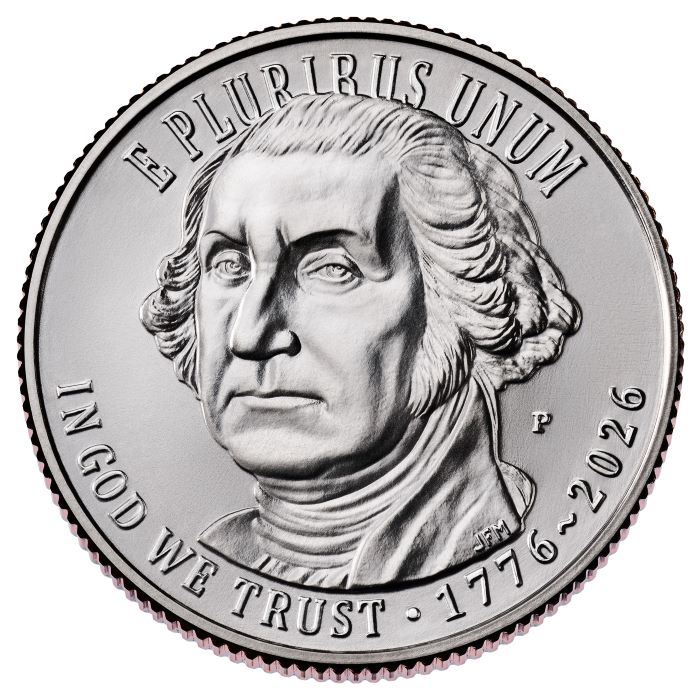
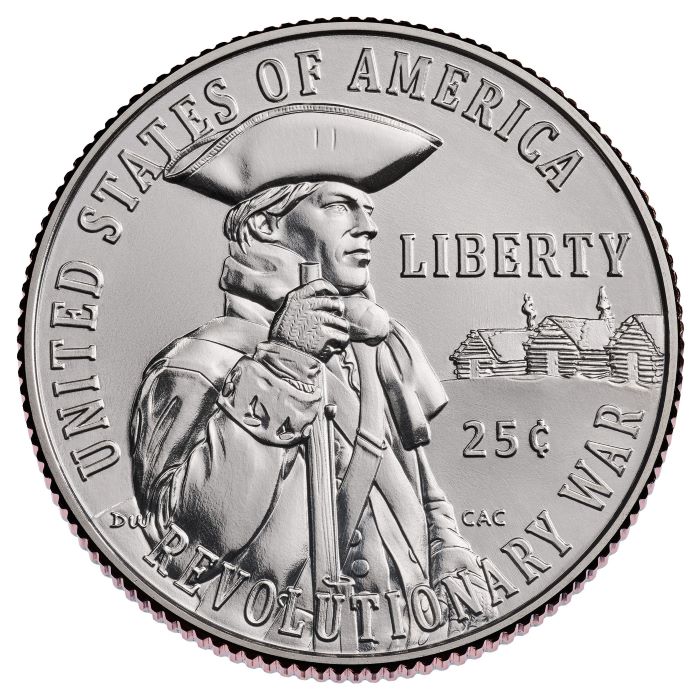
The reverse remembers the Continental Army’s 1777–1778 winter encampment. Rather than showing a battle victory, it focuses on a soldier and the conditions the army endured. The huts behind the figure help place the scene. The contrast with Washington’s obverse portrait links leadership with the experience of the soldiers.
The dates can initially seem inconsistent: why show 1776 when the camp came later? The dual date commemorates the nation’s anniversary, not the exact year of every pictured event. In the same way, the broader series reaches from the Mayflower Compact to Lincoln’s Gettysburg Address without claiming those events all occurred in 1776.
Washington’s portrait also differs from familiar recent quarters. The Mint’s March 2026 newsletter connects it with the design used on the 2007 Washington Presidential dollar. A different portrait is therefore part of the intended design, not proof of a counterfeit or a special mint error.
Four details to check on your coin
Identify the theme before researching a price| Check | Expected feature |
|---|
| Portrait side | George Washington, anniversary dates and the mint mark on a regular P or D coin. |
|---|
| Reverse scene | Continental Army soldier, musket and winter huts; not a drummer, ship or Liberty Bell. |
|---|
| Denomination | 25¢ on the reverse means one quarter dollar. |
|---|
| Inscription | REVOLUTIONARY WAR identifies this theme within the five-coin program. |
|---|
The old drummer design belongs to the 1776–1976 Bicentennial quarter, not this 1776–2026 issue. If the second date is 1976, you are looking at a different anniversary program. Read the full date instead of relying on a seller’s “Bicentennial” or “250th” label.
Use the complete 2026 quarter design guide to compare the ship, Liberty Bell, Independence Hall and clasped-hands themes. That overview also explains the special July 4 Declaration privy issue; it is not a Revolutionary War variety.
March 23 and March 27: why there are two dates
The March 23 release included a public launch at George Washington’s Mount Vernon and the start of circulation release through the Federal Reserve system. March 27 was the Mint’s separate retail release of Revolutionary War rolls and bags. Receiving a coin later from a bank does not contradict either date.
The Uncirculated Coin Set provides another collector route. It includes both Philadelphia and Denver examples along with the other 2026 themes. Proof sets offer specially made San Francisco coins. Decide whether your goal is a theme set, a P/D mint set or a Proof collection before buying overlapping products.
What is a Revolutionary War quarter worth?
For an ordinary worn circulation example, 25 cents is the useful baseline. This article does not establish a verified secondary-market range for uncirculated or Proof versions. Collector demand and preservation may support a premium, but a new release date alone is not evidence of scarcity.
For a potential purchase, compare sold records for the same Revolutionary War design, mint, metal and finish. Keep certified and raw comparisons separate. Check whether a price covers one coin or a quantity: a 40-quarter roll contains $10 in face value, before any collector premium or shipping.
How to assess a claimed error
First compare the suspected feature against the normal photographs. The soldier, huts, dual date and changed Washington portrait are expected. Then photograph the full coin and the detail in even light. Damage, glare and ordinary contact marks should not be assigned an error price simply because they look unfamiliar.
Do not clean the coin before showing it to a specialist. If the feature remains plausible after comparison, use the appraisal guide to choose an appropriate assessment. A documented attribution should come before a high-value claim.


 App Store