2026 Quarters:All Five Designs, Release Dates and Mint Marks
Compare both sides of all five 2026 quarters, understand the 1776–2026 date, and separate circulation releases from collector versions.
In this article
What are the five new 2026 quarters?
The five 2026 U.S. quarters are Mayflower Compact, Revolutionary War, Declaration of Independence, U.S. Constitution and Gettysburg Address. Each has its own obverse and reverse, with the dual date 1776–2026 marking 250 years of independence. They are 25-cent coins, not coins struck in 1776.
Regular circulation versions are copper-nickel clad. Collector uncirculated sets, clad Proofs and silver Proofs require separate comparisons. A normal worn circulation example starts at $0.25; the anniversary date alone does not establish a premium.
Mayflower shipments began January 5; Revolutionary War, Declaration and Constitution followed. As of October 16, the Gettysburg public launch is scheduled for October 21. A launch event, bank distribution and a collector-product sale are different dates.
One year, five chapters of history
The series moves from the Mayflower Compact through independence and constitutional government to the Gettysburg Address. It is a sequence of historical themes, not five events all dated 1776. The 2026 date identifies the issue year; the older date explains the national anniversary.
2026 quarter designs: both sides of all five coins
2026
Mayflower Compact
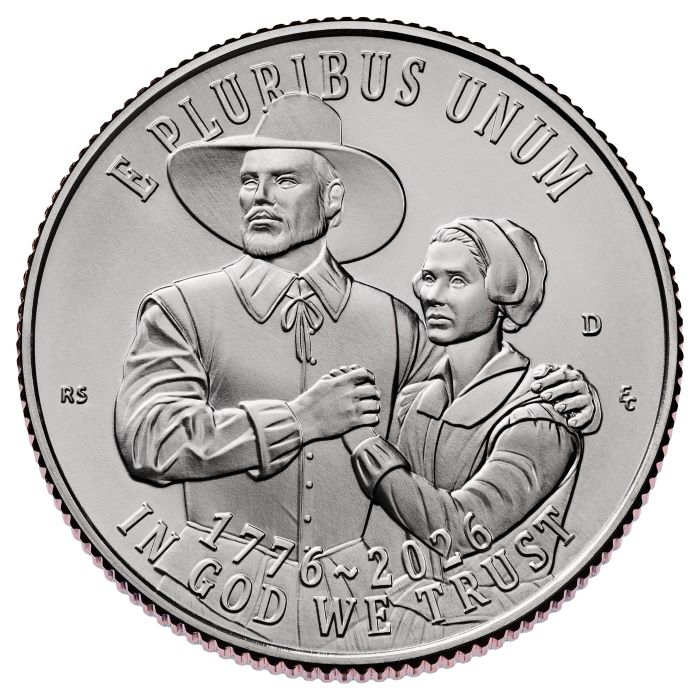
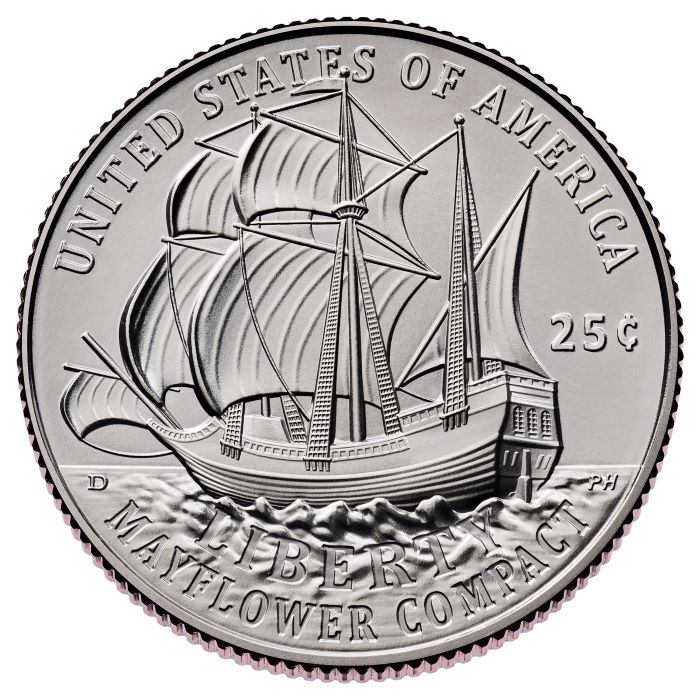
Mayflower Compact · obverse Two Pilgrims embrace.Mayflower Compact · reverse The Mayflower sails through rough seas.
The 1620 agreement connected a small community with the idea of governing by consent. The ship identifies the journey; the embracing figures add a human arrival scene. Neither face is the familiar Washington design.
Identify it: Look for MAYFLOWER COMPACT and 25¢ on the ship side.
2026
Revolutionary War
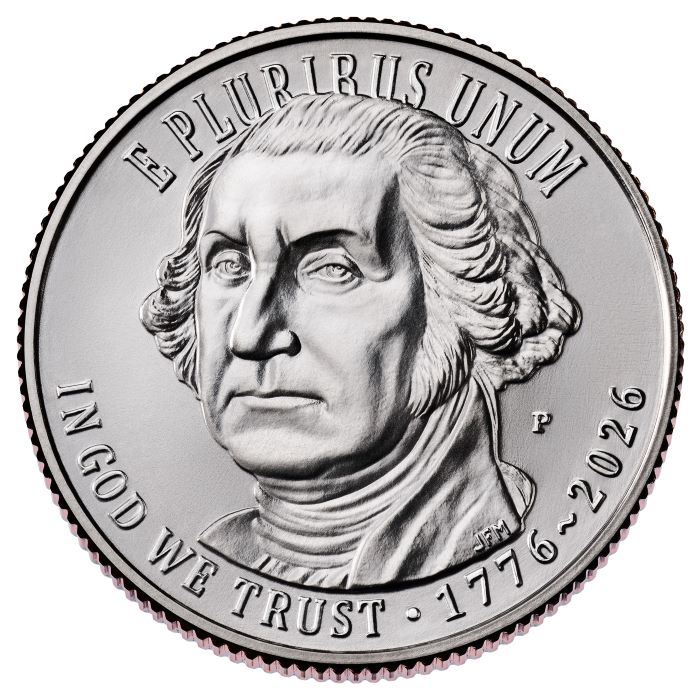
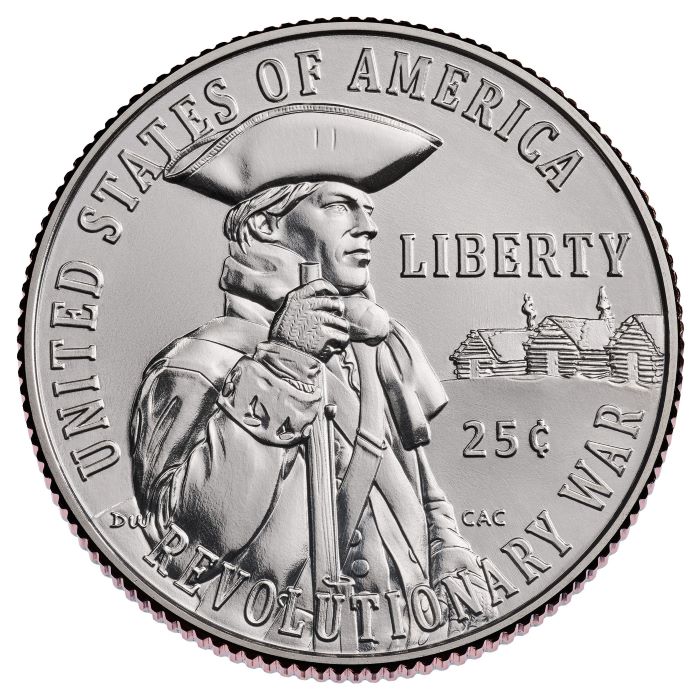
Revolutionary War · obverse George Washington.Revolutionary War · reverse A Continental Army soldier at Valley Forge.
The design turns from a founding agreement to the endurance needed to secure independence. Its winter scene refers to the 1777–1778 encampment, even though the anniversary date begins with 1776.
Identify it: Match Washington with the soldier, rather than assuming every Washington quarter has this reverse.
2026
Declaration of Independence
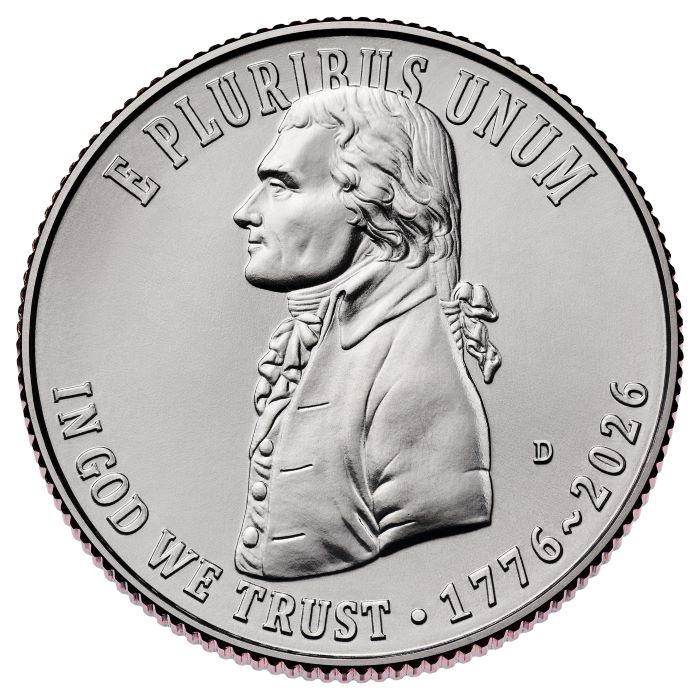
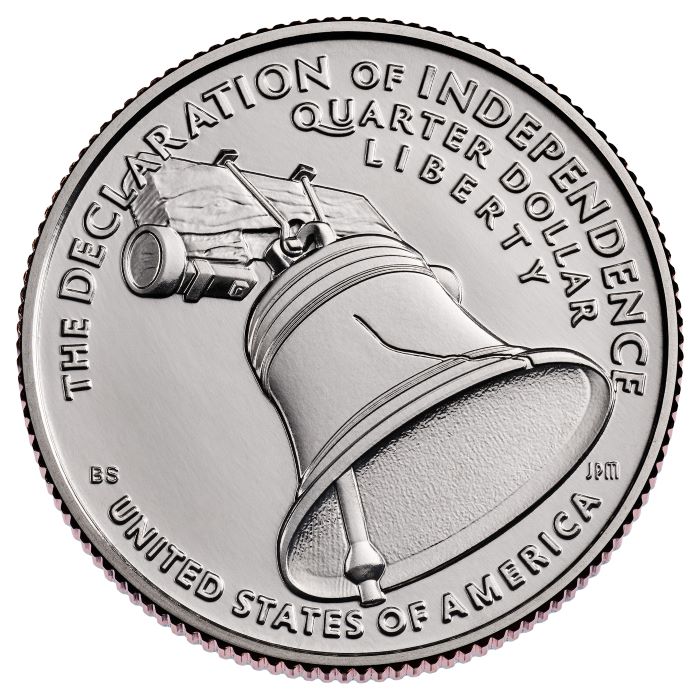
Declaration of Independence · obverse Thomas Jefferson.Declaration of Independence · reverse The Liberty Bell.
Jefferson and the bell connect a named founder with a symbol of independence. The visible crack belongs to the depicted bell; it is not evidence of a crack in the coin die.
Identify it: Read THE DECLARATION OF INDEPENDENCE and QUARTER DOLLAR.
2026
U.S. Constitution
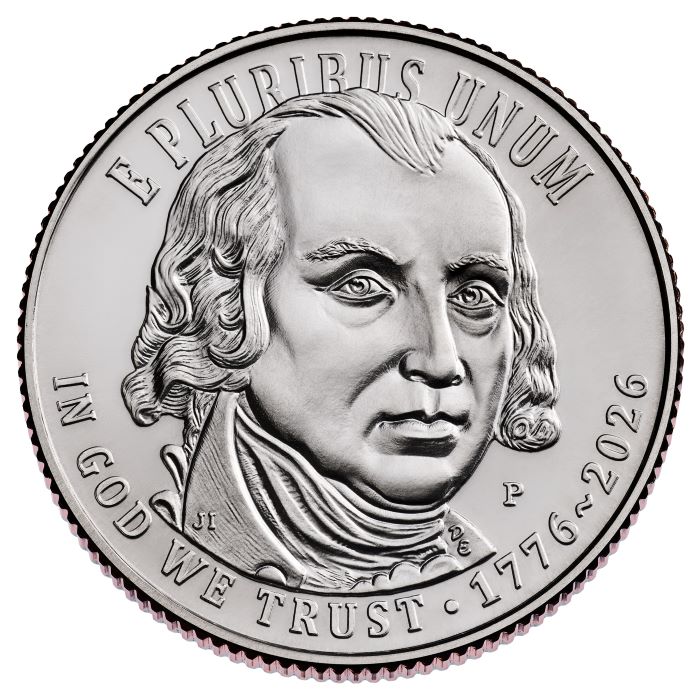
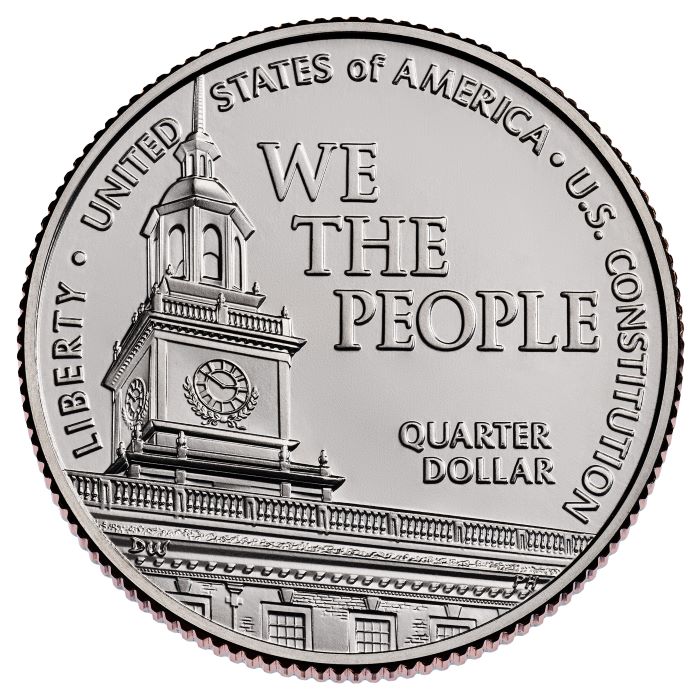
U.S. Constitution · obverse James Madison.U.S. Constitution · reverse Independence Hall.
The building links the debate over the Declaration with the later work of framing the Constitution. Madison’s portrait and WE THE PEOPLE shift attention from declaring independence to establishing government.
Identify it: Use the building and U.S. CONSTITUTION inscription together; do not identify it from a portrait alone.
2026
Gettysburg Address
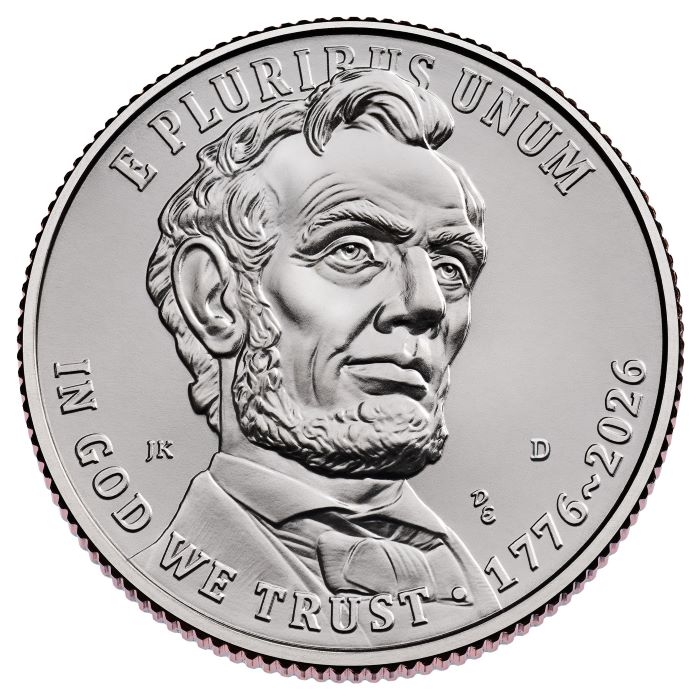
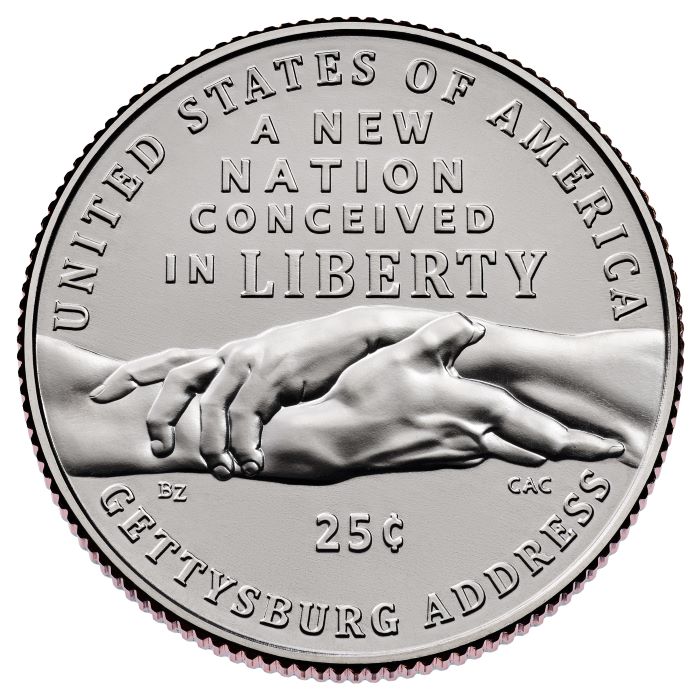
Gettysburg Address · obverse Abraham Lincoln.Gettysburg Address · reverse Two hands clasp.
The final theme moves to the Civil War and Lincoln’s 1863 address. The clasped hands and liberty inscription emphasize the continuing national project, rather than an event that occurred in 1776.
Identify it: Look for GETTYSBURG ADDRESS and 25¢. Lincoln also appears on cents, so confirm the denomination.
2026 quarters release dates
A bank may receive new quarters later than the initial Federal Reserve shipment. Buying a Mint product is a separate route, with a separate price and availability. The table distinguishes these events rather than treating every date as a nationwide on-sale day.
Official milestones checked October 16, 2026
Theme
Circulation or public launch
Mint rolls and bags
Mayflower Compact
January 5: circulation shipments began
February 5
Revolutionary War
March 23: circulation release and Mount Vernon launch
March 27
Declaration of Independence
June 1: circulation release
June 16
U.S. Constitution
August 10: circulation release
August 26
Gettysburg Address
October 21: scheduled public launch; still upcoming on this review date
No date established by the sources cited here
The June 30 Uncirculated Coin Set already included all five themes from Philadelphia and Denver. A Gettysburg coin in a collector set before October 21 therefore is not automatically an error or an unofficial issue.
Mint marks, metal and special versions
Identify the version before comparing prices
Version
What to check
Regular P / D
Philadelphia P or Denver D; copper-nickel clad, 5.670 g, 24.26 mm, reeded edge.
S clad Proof
San Francisco collector strike; compare with clad Proofs, not pocket-change coins.
S silver Proof
99.9% silver in the Silver Proof Set; the S by itself does not distinguish clad from silver.
July 4 Declaration privy
A separate authorized circulation issue: July 4 privy, no mint mark; announced quantity 250,000.
The July 4 privy is an intentional feature, not a minting error. Its announced quantity describes that special issue, not the production total for every Declaration quarter. Confirm the exact design and mark before using a special-issue sales comparison.
For the Washington-and-soldier coin, the Revolutionary War quarter guide explains the portrait, winter scene and two March release dates in detail.
Start an ordinary circulated quarter at its 25-cent face value. A pleasing uncirculated coin, a Proof or a recognized special issue can have a collector premium, but no verified secondary-market range is established here. A complete-set retail price is not the value of one quarter.
Compare completed sales of the same theme, mint, metal, finish and grade. Record the sale date and whether the listing includes one coin, a roll or a set. For a suspected error, photograph both sides, the edge and the specific feature. Compare it with the correct normal design first: the Liberty Bell crack, dual date and changing portraits are intentional.
Scratches, staining and flattened letters do not alone establish a mint error. Keep the coin uncleaned and use the appraisal guide when a clearly identified feature could justify professional examination.
The key takeaway
Collect the five 2026 themes by matching both sides and the 1776–2026 date. Ordinary circulation coins are clad and have a 25-cent baseline; Proofs, silver versions and the July 4 Declaration issue are separate collecting categories. Check the release type as well as the date, and use like-for-like sold examples before paying a premium.
Frequently asked questions
How many 2026 quarter designs are there?
There are five themes: Mayflower Compact, Revolutionary War, Declaration of Independence, U.S. Constitution and Gettysburg Address. Each changes both sides; mint marks and finishes add versions, not additional themes.
What does 1776–2026 mean on a quarter?
The dual date marks the 250th anniversary of American independence. It is an intentional part of the 2026 design, not a wrong-date error or evidence the coin was made in 1776.
Are all 2026 quarters silver?
No. Regular circulation quarters are copper-nickel clad. The Silver Proof Set contains 99.9% silver quarters, while clad Proof versions also exist.
Is a 2026 quarter with no mint mark an error?
Not automatically. The authorized July 4 privy-mark Declaration quarter has no mint mark. Identify the precise issue before deciding whether an absent letter is unusual.


 App Store