

 App Store

COIN VALUE GUIDES · KENNEDY HALF DOLLARS
1776–1976 Half Dollar Value by Metal and Finish
Identify Bicentennial Kennedy half dollars, separate clad from silver collector issues, and compare dated guide values without confusing normal designs with errors.
 HeriBase TeamPublished
 In this article
How much is a 1776–1976 half dollar worth?
A common circulated 1776–1976 Kennedy half dollar with no mint mark or D is usually worth its 50-cent face value. The dual date and Independence Hall reverse are normal Bicentennial features, not mint errors.
Silver and collector finishes change the comparison. San Francisco made clad Proofs plus 40% silver regular strikes and Proofs, so S alone does not prove silver. NumisMedia’s guide checked October 16, 2026 lists $1.84 for Philadelphia and $1.61 for Denver at Mint State 63 (MS63), compared with $11.50 for a regular-strike silver S at that grade.
Those are dated guide estimates for uncirculated coins, not prices for worn pocket change. Exceptional grades, contrast designations and authenticated errors need their own comparisons; first establish metal, finish and condition.
Kennedy and Independence Hall
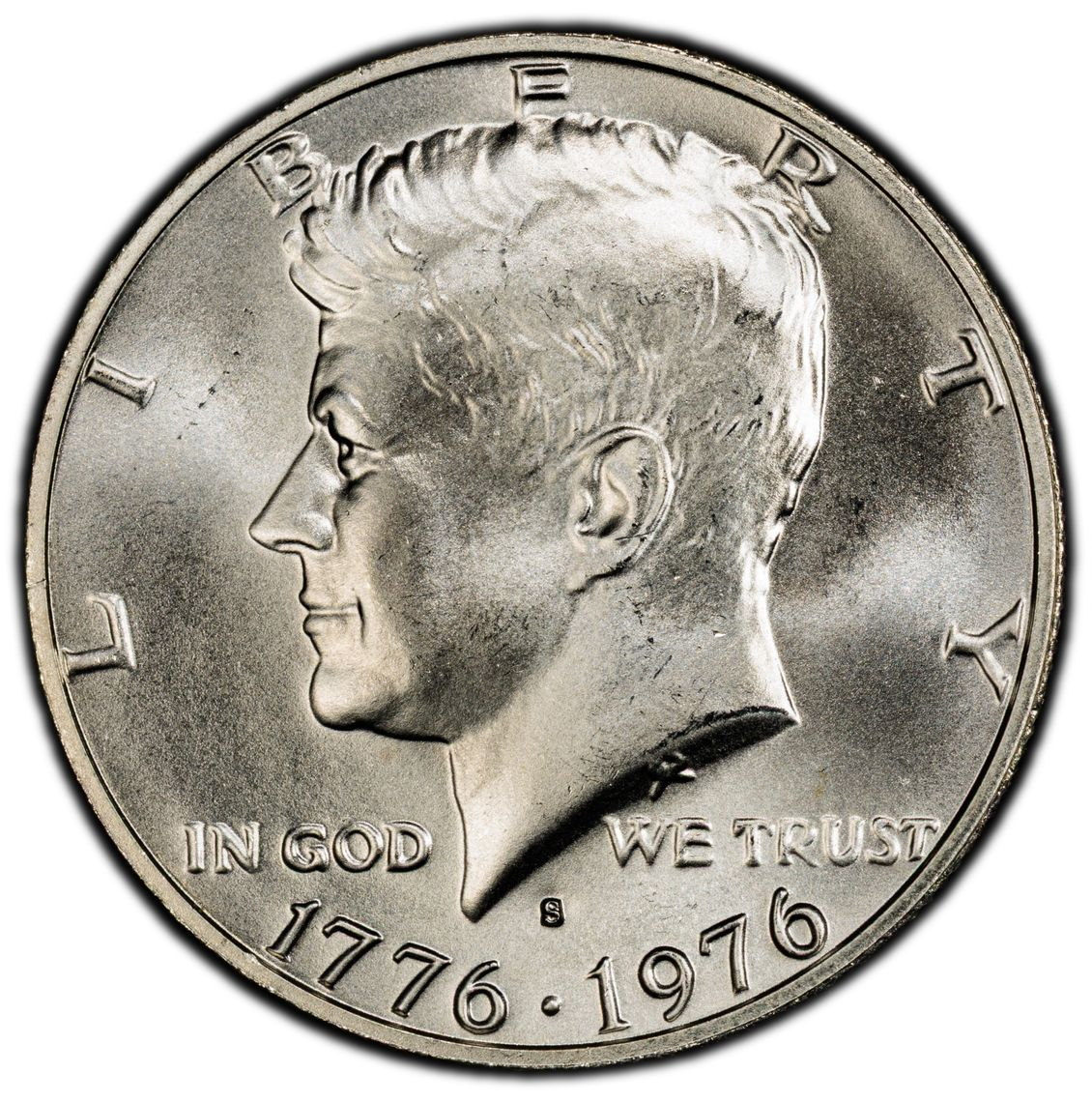
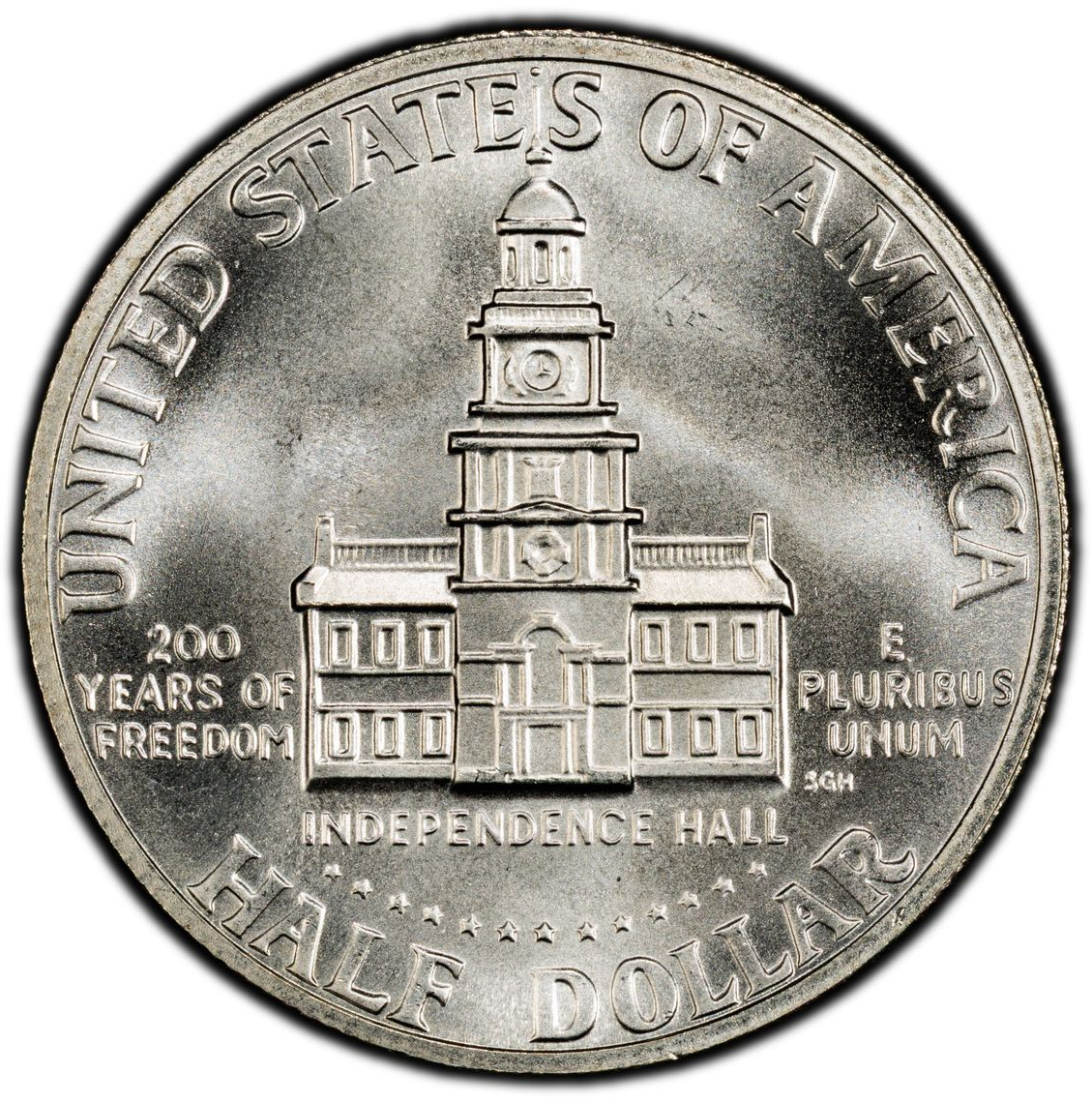
These two sides belong to a silver regular-strike example. The same commemorative design appears on clad coins, so the building and dual date do not identify the metal.
Why the half dollar carries two dates
| Feature | What it means |
|---|---|
| Denomination | Half dollar · 50 cents |
| Date on coin | 1776–1976 |
| Production period | 1975 and 1976 |
| Obverse | John F. Kennedy |
| Reverse | Independence Hall; design by Seth Huntington |
| Standard silver collector issue | 40% silver overall; about 11.50 g |
| Standard clad issue | Copper-nickel clad; about 11.34 g |
The national Bicentennial program gave the quarter, half dollar and dollar temporary reverse designs. Seth Huntington’s Independence Hall won the half-dollar design competition, and the coin entered circulation on July 7, 1975. The anniversary date therefore does not tell you which of the two production years a particular coin came from.
Read HALF DOLLAR below the building when sorting mixed commemorative coins. The dollar’s Liberty Bell-and-Moon reverse belongs to a different denomination, covered in the Eisenhower dollar guide. For the broader portrait series and its earlier silver changes, use the Kennedy half-dollar overview.
Mint mark, metal and finish need separate checks
No letter or D: the normal clad circulation issue
Look below Kennedy’s neck, above the dual date. No letter identifies Philadelphia; D identifies Denver. For their standard issues, the material is copper-nickel clad. A visible copper-colored core at the edge supports that identification, but avoid filing or scratching the edge to inspect it.
S: check which collector issue you have
San Francisco produced clad Proofs and silver collector coins. A mirrorlike surface suggests Proof manufacture, not silver purity. The regular-strike silver coin shown above must not be compared with a clad Proof just because both have S.
For a loose coin, check the original issue information, edge and a careful weight measurement together. The nominal difference between clad and silver halves is small, so an ordinary kitchen scale is not a reliable separator. A doubtful result calls for better measurement or expert examination, not a confident silver label.
Normal design details are not errors
The dual date, the building, the bell in its tower and the inscription 200 YEARS OF FREEDOM belong to the intended design. Soft details may reflect wear or strike quality. Compare an unusual feature with a specifically attributed variety; marks, tarnish or a familiar design viewed under glare are not enough.
Record both sides and any packaging. If there is a credible unusual-metal or mint-error question, follow the coin appraisal guide. A general image match helps identify the design but cannot authenticate an error.
Bicentennial half-dollar value by issue
| Issue | Metal | Grade | Guide value | Comparison limit |
|---|---|---|---|---|
| No mint mark | Clad | MS63 | $1.84 | Regular strike; no wear |
| D | Clad | MS63 | $1.61 | Regular strike; no wear |
| S Proof | Clad | PR65 | $6.60 | No Cameo designation |
| S regular strike | 40% silver | MS63 | $11.50 | Not Proof |
| S Proof | 40% silver | PR65 | $13.80 | No Cameo designation |
MS means Mint State; PR indicates Proof. Proof is a production method, not a synonym for perfect condition. Cameo and Deep Cameo describe contrast and require separate guide entries. These figures are retail estimates, not purchase offers or a guarantee of the amount received after selling costs.
Silver content gives another reference point
The 40% silver half contains approximately 0.1479 troy ounce of silver. Its metal-content calculation is 0.1479 × the current silver price per troy ounce. That is a bullion reference, not a collector appraisal or an assured dealer payment. Do not use the larger silver quantity of a 1964 Kennedy half dollar for this coin.
Condition matters beyond the metal
Inspect Kennedy’s cheek, the open fields and the building for wear or contact marks. Proof hairlines and haze can matter even without circulation. Use the grading guide and cleaning-signs guide to choose a sensible comparison; polishing removes evidence rather than creating an uncirculated coin.
For a common worn clad example, paying certification fees may not make economic sense. For an unusually well-preserved or genuinely anomalous piece, seek an initial opinion before deciding whether formal grading is worthwhile. Keep a realistic distinction between a collectible souvenir and a confirmed premium issue.
The key takeaway
Most worn 1776–1976 clad half dollars are 50-cent coins. Silver collector issues, Proofs and exceptional condition belong in separate value comparisons; neither the dual date nor S alone proves a premium silver coin.
Identify the mint, metal and finish, then compare the same grade. Preserve its surfaces and use current matching sales or the silver-content formula as appropriate, rather than a headline auction price.
Frequently asked questions
Is a 1776–1976 half dollar with no mint mark rare?
No. The missing mint letter is normal for Philadelphia. Ordinary worn clad examples are common and usually worth their 50-cent face value.
Are all S-marked Bicentennial half dollars silver?
No. San Francisco made clad Proofs as well as 40% silver regular strikes and Proofs. The S identifies the mint, not the metal.
Why does my half dollar say 1776–1976?
The dual date commemorates the United States Bicentennial. It was used on half dollars produced in both 1975 and 1976 and is part of the normal design.
How much silver is in a silver Bicentennial half dollar?
The standard silver collector issue contains 40% silver overall, approximately 0.1479 troy ounce. Multiply that by the current silver price per troy ounce for a metal-content reference, not a guaranteed sale price.
Is a 1976 half dollar the same as a 1776–1976 50-cent piece?
Yes. The Bicentennial Kennedy half dollar carries the dual date 1776–1976 and Independence Hall on the reverse. An ordinary worn clad example generally starts at its $0.50 face value; silver collector issues, Proofs and exceptional grades need separate comparisons. This is a half dollar, not the Bicentennial quarter or Eisenhower dollar.
References
SourcesOpen references
- U.S. Mint: design competition, dual-date production and release
- PCGS: silver regular-strike specifications
- PCGS: clad specifications and circulated face-value baseline
- NGC: 40% silver content and 0.1479 troy ounce silver weight
- NumisMedia: Kennedy half-dollar issue and finish values, checked October 16, 2026