

 App Store

COIN VALUE GUIDES · LINCOLN SHIELD CENT
2025 Penny:Value, Mint Marks and the Final Circulation Year
Understand the last circulation-year penny. Compare ordinary cents, S Proofs and Omega issues, with real coin photos and clearly dated price references.
 HeriBase TeamPublished
 In this article
What is a 2025 penny worth?
An ordinary worn 2025 penny with no mint mark or a D is generally worth its one-cent face value. Uncirculated examples can sell for a premium, but the date alone does not make them rare. A March 2025 published guide quoted $0.50–$2 for ordinary uncirculated examples; that is a dated reference, not a verified October 2026 selling range.
2025 was the final year of U.S. penny production for circulation, ending on November 12. Existing pennies remain legal tender, and collector versions continue. The standard coin is copper-plated zinc, weighs 2.50 g and has Lincoln on the front and a Union Shield on the back.
Separate ordinary coins from S-marked Proofs, exceptional certified grades, authenticated errors and the special Ω (Omega) issues. The Omega coins were offered in 232 three-coin sets containing Philadelphia and Denver cents plus a gold cent. Those sets are not a price comparison for a penny found in change.
The 2025 date and the Union Shield
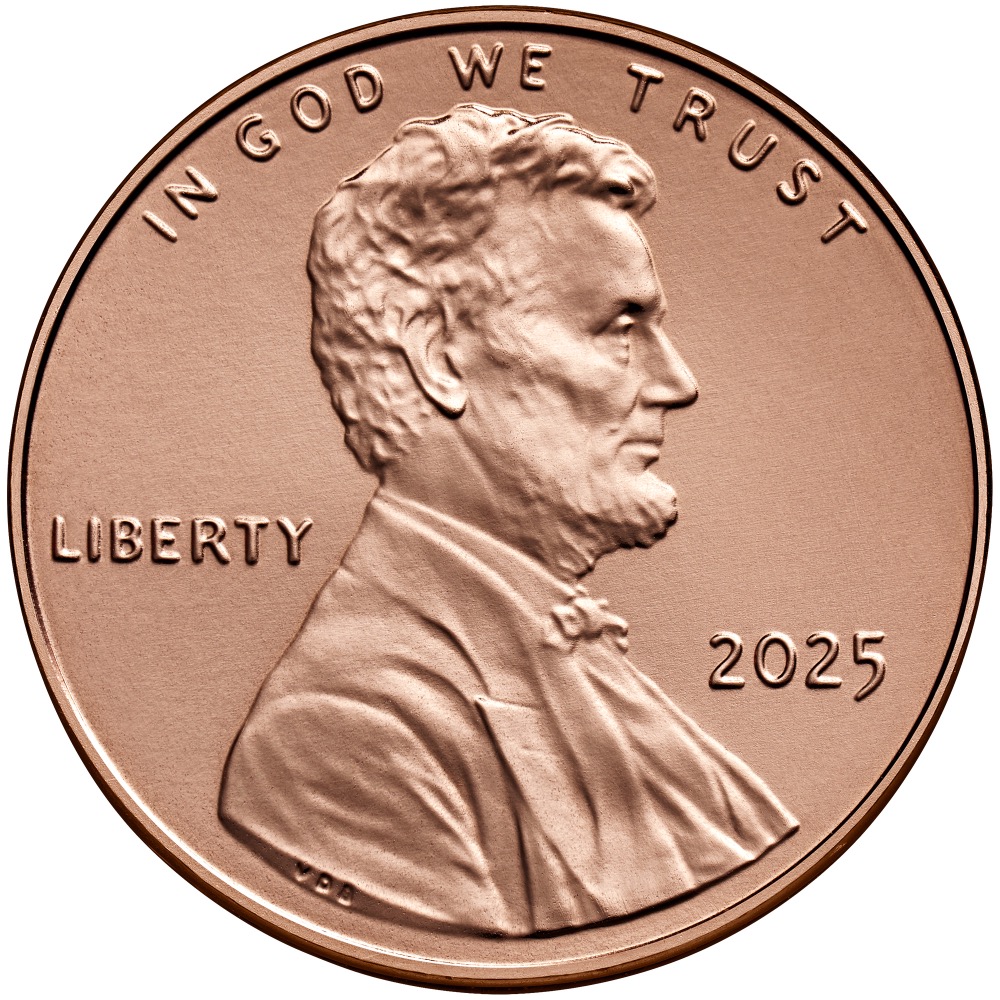
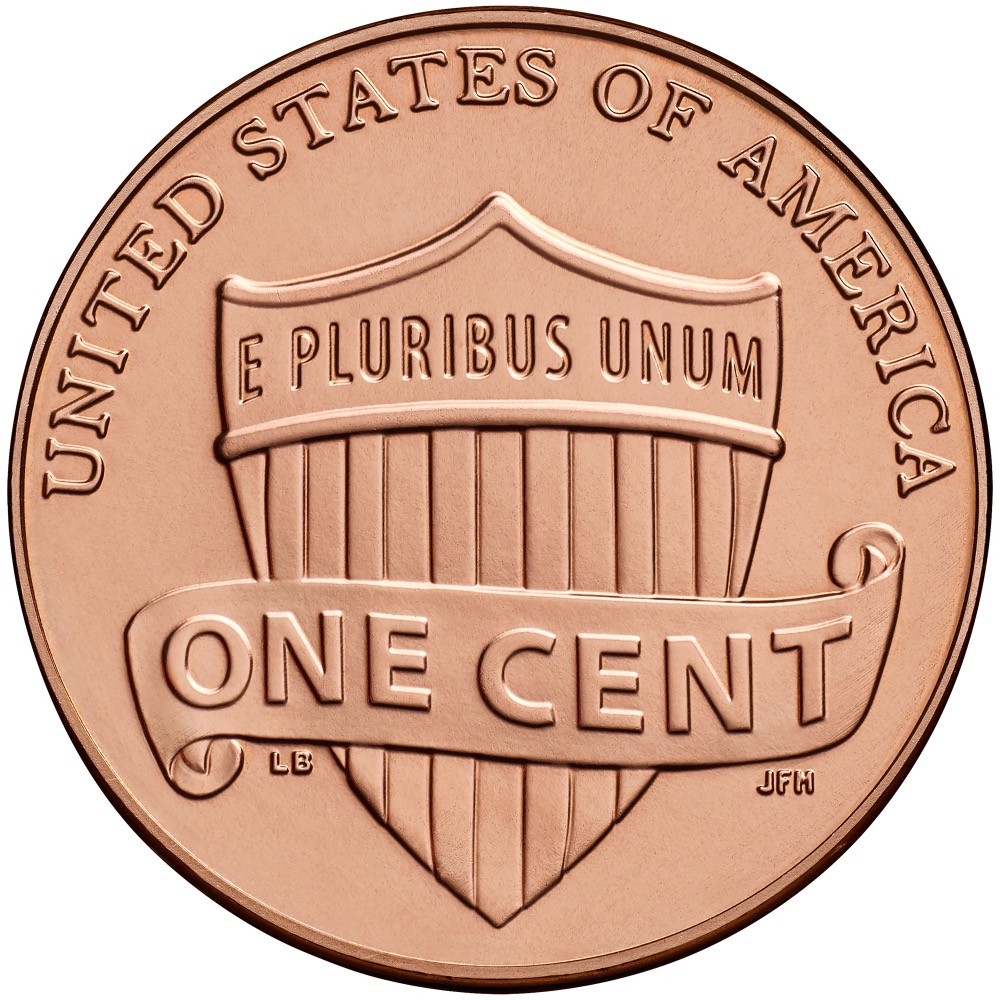
Understand the different 2025 pennies
The story: the last circulation year, not the last penny
A 2025 cent marks a change in how the denomination is supplied. At the Philadelphia ceremony on November 12, 2025, the Mint concluded production for everyday circulation after a run dating to 1793. Producing a coin worth only one cent had become increasingly costly, while large quantities of existing pennies remained available. The decision concerned new circulation supply; it did not erase pennies already in people’s pockets.
The familiar design helps explain why the change is easy to miss. Lincoln’s portrait dates to 1909, and the shield reverse began in 2010. Its 13 stripes and unifying horizontal bar evoke the states joined as one country, connecting the small everyday coin to Lincoln’s preservation of the Union. Lyndall Bass designed the reverse and Joseph Menna sculpted it.
For the earlier designs, see the Lincoln wheat penny overview and the four 2009 Lincoln anniversary reverses. The 2025 issue belongs to the later Shield series, not either of those groups.
| Issue | Mint identification | Metal | Finish or release | What distinguishes it |
|---|---|---|---|---|
| Regular Philadelphia | No mint mark | Copper-plated zinc | Circulation and collector-set examples | An absent P is normal |
| Regular Denver | D below the date | Copper-plated zinc | Circulation and collector-set examples | D identifies Denver; it is not an error |
| San Francisco Proof | S below the date | Copper-plated zinc | Collector Proof sets | Specially prepared strike and surfaces |
| Omega Philadelphia / Denver | Ω privy; Denver also has D | Copper-plated zinc | Special three-coin sets | Documented special issue, not an ordinary roll find |
| Omega gold | Ω privy; Philadelphia issue | 99.99% gold | Gold component of the special sets | Different metal and market from a normal cent |
Standard copper-plated zinc cents contain 2.5% copper and 97.5% zinc, with a nominal diameter of 19.05 mm and a plain edge. These specifications do not describe the special gold coin. If you are sorting older copper and zinc cents, the 1982 penny metal-and-date comparison covers that separate transition.
2025 · mint mark
Denver: read the small D below the date
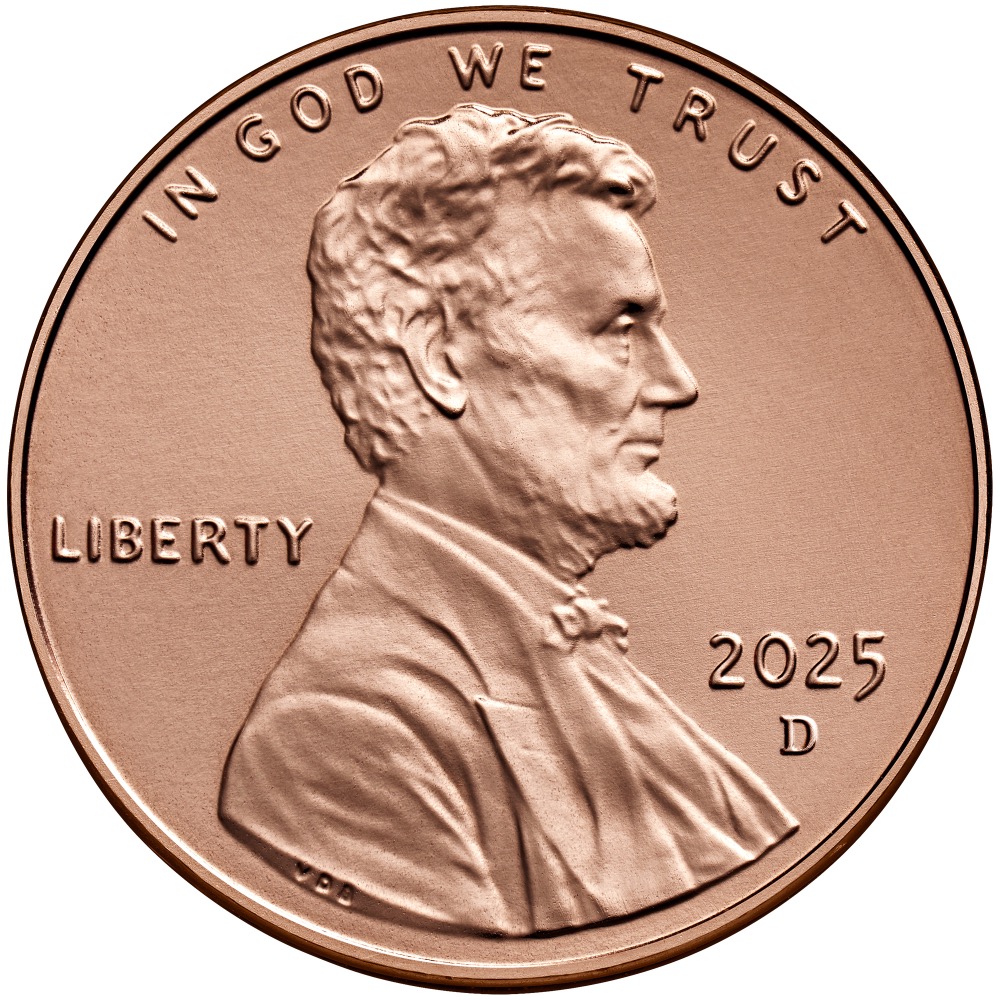
The D belongs beneath the date on Lincoln’s side. A normal Philadelphia cent has no letter there. Dealers may call it a “2025-P” to identify the mint, but that catalog shorthand does not mean a P should be visible on the coin.
Both are regular issues. Choose the sharper, cleaner example for an album; do not pay an error premium simply because one has a letter and the other does not.
Proof is a method of manufacture
The 2025-S cent was made for collectors. A typical Proof shows reflective fields and contrasting frosted devices, but shine alone does not establish Proof status. Check the S and the complete coin; polished circulation coins can also look unusually bright. The coin grading guide explains why finish and numerical condition are separate questions.
A penny included in the 2025 Silver Proof Set is still copper-plated zinc. “Silver” describes the set’s quarters, dime and half dollar, not every coin inside it. The Mint’s launch announcement explicitly identifies which denominations contain silver.
What the Omega mark means
The Ω privy distinguishes the special closing issues. The auction offering comprised 232 sets, each with a Philadelphia cent, a Denver cent and a Philadelphia gold cent, accompanied by a serialized certificate. Do not mistake the number of sets for the entire 2025 penny mintage.
An ordinary 2025 cent does not become one of these issues through a seller’s “last penny” label. For a purported Omega coin, verify the attribution and documented origin. An added symbol, a replica or a plated souvenir cannot be valued as the official special issue. The auction catalog is listed in the references for checking the original offering.
How to interpret 2025 penny prices
Start with the ordinary coin
For a worn regular Philadelphia or Denver cent without an identified error, one cent is the practical starting point. A local shortage or an attractive listing photograph does not establish rarity. PCGS lists 655,200,000 regular Philadelphia cents; even that one issue represents hundreds of millions of coins.
| Issue | Condition | Published indication | Price type | How to use it |
|---|---|---|---|---|
| No mint mark | Worn regular coin | $0.01 | Face-value baseline | Applies without an attributed premium feature |
| D | Worn regular coin | $0.01 | Face-value baseline | The D alone adds no rarity |
| No mint mark or D | Ordinary uncirculated | $0.50–$2 | Published guide range | Historical context; compare current sold examples |
| S Proof | Proof; grade unspecified | $25–$50 | Published guide range | Not a quote for every grade or today’s market |
These ranges come from Joshua McMorrow-Hernandez’s March 16, 2025 guide, before circulation production ended. They show how ordinary and collector issues were being separated at that time. They are not an October 2026 appraisal: the guide does not specify a numerical grade for the Proof range, and this article does not have a verified current sold-price range for every issue.
Match what actually sold
For a useful comparison, match the mint, ordinary or Omega issue, regular strike or Proof, grade, color designation and whether the listing sold one coin or a complete set. A certified high-grade price includes a condition judgment that a raw coin has not received. Red (RD) describes retained copper color; it does not mean a coin has a solid copper composition.
For rolls, divide the coin price by the actual number of coins, then check shipping separately. A standard penny roll contains 50 coins, with a face value of $0.50. A sealed wrapper, an early shipping label or a seller’s “last year” description does not by itself prove exceptional condition or an Omega attribution.
When an unusual coin deserves a closer look
A possible mint error should be identified by its specific feature, rather than by the year’s news coverage. Take photographs of both sides and the detail, and preserve the surface. Scratches, staining and damage do not become valuable mint errors because production has ended. Use the guide to cleaning signs before trying to improve its appearance, and the coin appraisal guide before paying for certification.
Check your coin in three steps
1. Identify the issue
Read 2025 on the portrait side and inspect the area beneath it for D, S or no letter. Look at the reverse for the Union Shield. If a supposed special issue has an Omega mark, record it separately and check its documentation before assigning a value.
2. Record the finish and condition
Keep the coin in its original holder if it came from a collector set. Note wear, spots and contact marks without cleaning it. For a loose standard coin, a measured weight near 2.50 g is consistent with the specification, but weight alone does not authenticate it or establish a grade.
3. Choose the right comparison
For ordinary album coins, compare ordinary examples. For certified coins, match the grade and attribution. For an original set, compare complete sets with the same packaging and contents. Save the sale date and total paid so a later change in demand is not confused with a difference in the coin itself.
The key takeaway
A 2025 date makes a penny historically interesting, but the issue and condition determine whether it carries a collector premium. Ordinary worn coins start at one cent; Proofs and documented Omega coins belong in separate comparisons.
Keep a clean, unaltered example of each regular mint if you enjoy the final circulation year. Before paying more, identify the exact version and compare recent completed sales. Collector production continues, so “last circulation year” should not be read as “no more pennies of any kind.”
Frequently asked questions
Is 2025 the last year of the penny?
2025 was the final year of U.S. penny production for circulation, which ended on November 12. The Mint continues collector versions, and existing pennies remain legal tender.
Is a 2025 penny with no mint mark rare?
No mint mark is normal for a regular Philadelphia 2025 cent. PCGS lists 655,200,000 for that issue. An absent P does not establish an error or a premium.
Is the 2025-S penny made of silver?
No. The standard 2025-S Proof cent is copper-plated zinc, including the cent in the Silver Proof Set. In that set, the quarters, dime and half dollar are the silver coins.
Does every 2025 penny have an Omega mark?
No. The Omega privy identifies special issues offered in 232 three-coin sets. Ordinary 2025 pennies do not have it, and their value should not be compared with the special sets.
References
SourcesOpen references
- U.S. Mint: November 12, 2025 ceremony and end of circulation production
- U.S. Mint: penny FAQs, continued collector production and legal-tender status
- U.S. Mint: design history and standard copper-plated zinc specifications
- U.S. Mint: 2025 Silver Proof Set contents and silver denominations
- U.S. Mint: Omega three-coin offering and gold composition
- Stack’s Bowers: December 11, 2025 Omega auction catalog
- PCGS CoinFacts: regular Philadelphia cent specifications and mintage
- PCGS CoinFacts: 2025-S Proof cent classification and metal
- Joshua McMorrow-Hernandez, U.S. Coins Guide: March 16, 2025 price snapshot